

What is Fintech and Its Impact on Modern Business

Many aspiring entrepreneurs and tech-savvy students notice how fast digital tools are changing money and business. Understanding financial technology matters because it is transforming not only banking, but also payments, investments, and insurance on a global scale. By exploring fintech’s core concepts and common misconceptions, you can spot opportunities, navigate emerging technologies, and better prepare for decisions in this dynamic financial world.
Table of Contents
- Fintech Defined: Core Concepts And Misconceptions
- Key Types Of Fintech Solutions Today
- How Fintech Works In Business And Daily Life
- Benefits And Opportunities For Users And Firms
- Risks, Security, And Regulatory Compliance
- Common Pitfalls And What To Avoid
Key Takeaways
| Point | Details |
|---|---|
| Understanding Fintech | Fintech is a transformative blend of technology and financial services, reshaping how money and transactions operate in the digital age. |
| Core Technologies | Key technologies driving fintech include Artificial Intelligence, Big Data, Cloud Computing, and Distributed Ledger Technology. |
| Regulatory Challenges | Rapid fintech growth presents regulatory challenges, requiring continuous adaptation to ensure consumer protection and risk management. |
| User Benefits | Fintech enhances user experience by offering personalized financial management tools and increased accessibility to services. |
Fintech Defined: Core Concepts and Misconceptions
Fintech represents a transformative digital revolution in financial services, blending cutting-edge technology with traditional financial mechanisms. At its core, financial technology is more than just a buzzword – it’s a comprehensive reimagining of how money, transactions, and financial services operate in the digital age.
The landscape of fintech encompasses several critical technological domains, as outlined by digitized global wholesale markets research. These technological foundations include:
- Artificial Intelligence for advanced financial analytics
- Big Data processing and predictive modeling
- Cloud Computing infrastructure
- Distributed Ledger Technology like blockchain
Contrary to popular misconception, fintech isn’t just about mobile banking or cryptocurrency. It represents a fundamental restructuring of financial ecosystems, digitizing financial services to create more inclusive, efficient systems that transcend traditional banking boundaries.
The emergence of fintech can be traced to several pivotal moments, particularly the 2008 Global Financial Crisis, which exposed significant weaknesses in traditional financial systems. This catalyst prompted innovative startups to develop alternative financial solutions that were more transparent, accessible, and technologically sophisticated.
Key Characteristics of Modern Fintech:
- Leverages advanced digital technologies
- Prioritizes user experience and accessibility
- Challenges traditional financial service models
- Enables cross-border financial interactions
- Reduces transaction costs and complexity
While fintech presents remarkable opportunities, it also introduces complex regulatory challenges. Financial institutions and governments must continuously adapt to manage risks, ensure consumer protection, and foster responsible innovation in this rapidly evolving landscape.
Pro tip: Always conduct thorough research and understand the technological foundations before investing in or developing fintech solutions.
Key Types of Fintech Solutions Today
Fintech has dramatically transformed financial services by introducing innovative digital solutions that address traditional market limitations. Digital technology innovations have reshaped how individuals and businesses interact with financial systems, creating more accessible, efficient, and personalized experiences.
Key Fintech Solution Categories:
- Payment Solutions
- Mobile payment platforms
- Digital wallets
- Peer-to-peer transfer systems
- Lending Technologies
- Online credit scoring
- Automated loan approvals
- Crowdfunding platforms
- Investment Management
- Robo-advisors
- Algorithmic trading platforms
- Micro-investing applications
- Insurance Technology
- Usage-based insurance models
- AI-driven risk assessment
- Automated claims processing
The pandemic accelerated fintech adoption, pushing many traditional financial institutions to rapidly integrate digital solutions. These technologies are not just replacing existing systems but fundamentally reimagining financial interactions, making services more inclusive and user-friendly.
Here’s a summary of how fintech technologies impact different financial functions:
| Financial Function | Key Technology | Example Impact |
|---|---|---|
| Payments | Mobile platforms, blockchain | Faster, global transactions |
| Lending | AI algorithms, big data | Improved risk analysis |
| Investments | Robo-advisors, automation | Lower entry barriers |
| Insurance | Data analytics, cloud systems | Customized pricing models |
Fintech solutions blur boundaries between financial and technology sectors, creating unprecedented opportunities for innovation and customer service.
Each fintech vertical addresses specific market needs while leveraging advanced technologies like artificial intelligence, machine learning, and blockchain. The most successful solutions combine technological sophistication with intuitive user experiences, democratizing access to financial services.
Regulatory environments continue to evolve, with governments worldwide developing frameworks to support responsible fintech innovation while protecting consumer interests. This dynamic landscape ensures that fintech solutions remain adaptive, secure, and aligned with emerging market demands.
Pro tip: Continuously research and understand emerging fintech technologies to identify potential investment or career opportunities in this rapidly evolving sector.
How Fintech Works in Business and Daily Life
Fintech has revolutionized the way individuals and businesses interact with financial systems, transforming digital service delivery across multiple sectors. At its core, fintech creates seamless connections between technology and financial processes, making complex transactions simple and instantaneous.
How Fintech Operates in Different Contexts:
- Personal Finance
- Budgeting apps
- Investment tracking
- Automated savings tools
- Business Operations
- Expense management
- Digital payment processing
- Real-time financial reporting
- Banking Services
- Mobile check deposits
- Digital account opening
- Instant international transfers
- Investment Platforms
- Fractional stock purchasing
- Automated portfolio management
- Cryptocurrency trading
The technological infrastructure behind fintech relies on advanced algorithms, machine learning, and robust data analytics. These technologies enable platforms to provide personalized financial experiences, predict consumer needs, and streamline complex financial workflows with unprecedented efficiency.
Fintech breaks traditional boundaries, enabling consumers to customize financial services according to individual preferences and requirements.
Businesses benefit from fintech by reducing operational costs, improving transaction speeds, and accessing more sophisticated financial tools. Small enterprises can now leverage the same technological capabilities previously available only to large corporations, creating a more level playing field in the financial ecosystem.

Consumer adoption continues to accelerate, driven by increasing digital literacy and the demand for more convenient, transparent financial services. Mobile platforms and intuitive interfaces have made sophisticated financial tools accessible to broader populations, democratizing financial management and investment opportunities.
Pro tip: Explore multiple fintech platforms and compare their features to find solutions that best match your specific financial goals and lifestyle needs.
Benefits and Opportunities for Users and Firms
Fintech has emerged as a transformative force, creating new economic opportunities that fundamentally reshape how individuals and businesses interact with financial systems. By leveraging advanced technologies, fintech breaks down traditional barriers and introduces unprecedented levels of accessibility and efficiency.
Key Benefits for Users:
- Personal Financial Management
- Real-time expense tracking
- Automated budgeting tools
- Personalized financial insights
- Enhanced Accessibility
- 24/7 financial services
- Reduced geographical limitations
- Lower transaction costs
- Investment Opportunities
- Fractional investment options
- Diversified portfolio strategies
- Low-barrier entry platforms
- Risk Mitigation
- Advanced fraud detection
- Secure digital transactions
- Transparent financial reporting
For businesses, fintech represents a radical reimagining of operational strategies. Small and medium enterprises can now access sophisticated financial tools previously available only to large corporations, leveling the competitive landscape and driving innovation across industries.
Fintech democratizes financial services, transforming how users and firms interact with economic systems.
The technological infrastructure underlying fintech enables unprecedented personalization. Advanced algorithms analyze individual financial behaviors, providing tailored recommendations and predictive insights that traditional financial institutions could never match. This data-driven approach creates more responsive, intelligent financial ecosystems.
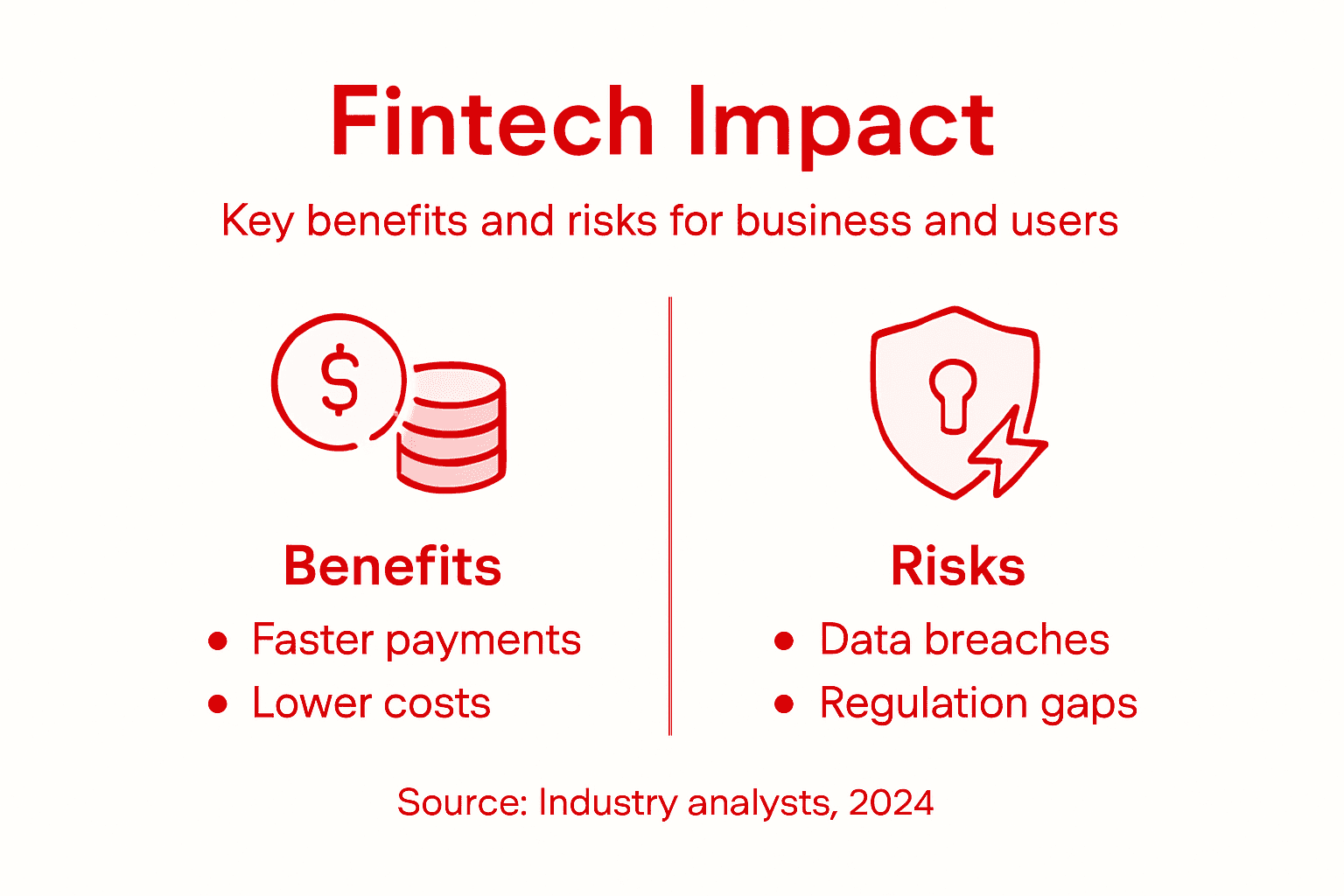
Consumer adoption continues to accelerate, driven by intuitive interfaces and the promise of greater financial control. Mobile platforms and user-friendly applications have made complex financial management accessible to broader populations, fundamentally changing perceptions about personal and professional financial interactions.
Pro tip: Continuously explore emerging fintech platforms and invest time in understanding their unique features to maximize your financial potential.
Risks, Security, and Regulatory Compliance
Fintech’s rapid expansion introduces complex challenges around security and regulation, demanding sophisticated risk management strategies. As digital financial technologies become increasingly integrated into global economic systems, understanding potential vulnerabilities becomes paramount for users and institutions alike.
Primary Risk Categories in Fintech:
- Technological Risks
- Cybersecurity vulnerabilities
- Data breach potential
- System reliability issues
- Operational Risks
- Algorithmic decision-making errors
- Platform stability challenges
- Technical infrastructure weaknesses
- Compliance Risks
- Regulatory uncertainty
- Cross-border legal complexities
- Data privacy regulations
- Financial Risks
- Fraud potential
- Investment platform reliability
- Transaction security gaps
Technological advances have simultaneously created powerful financial tools and unprecedented security challenges. Advanced encryption, multi-factor authentication, and continuous monitoring have become essential defensive strategies against increasingly sophisticated digital threats.
Modern fintech security requires constant vigilance, adaptive technologies, and proactive risk management approaches.
Regulatory frameworks are struggling to keep pace with rapid technological innovations. Governments worldwide are developing comprehensive guidelines to protect consumers, ensure fair market practices, and mitigate systemic risks associated with emerging financial technologies.
Consumer protection remains a critical focus, with regulators increasingly emphasizing transparency, data privacy, and clear disclosure of potential risks. Financial institutions and technology companies must collaborate to develop robust security protocols that balance innovation with comprehensive risk management.
Compare major risk types in fintech and how organizations typically respond:
| Risk Category | Typical Challenge | Common Mitigation Approach |
|---|---|---|
| Cybersecurity | Threats from hacking | Data encryption, multi-factor auth |
| Regulatory | Changing compliance standards | Ongoing legal review |
| Operational | System outages, instability | Regular software updates |
| Financial | Fraud, unreliable platforms | Monitoring tools, portfolio diversification |
Pro tip: Regularly update your digital security practices and maintain a diverse, monitored financial portfolio to minimize potential technological and financial risks.
Common Pitfalls and What to Avoid
Fintech offers remarkable opportunities, but navigating its complex landscape requires understanding potential critical cybersecurity vulnerabilities. Awareness and proactive strategies are essential to mitigate risks that could compromise financial security and technological investments.
Major Fintech Pitfalls to Watch:
- Technological Vulnerabilities
- Weak authentication protocols
- Inadequate encryption mechanisms
- Unprotected data transmission
- User Experience Errors
- Overlooking platform security
- Ignoring software updates
- Using unsecured networks
- Financial Management Mistakes
- Neglecting transaction monitoring
- Failing to diversify investments
- Trusting unverified platforms
- Regulatory Compliance Issues
- Ignoring legal frameworks
- Bypassing identity verification
- Misunderstanding platform regulations
Cybersecurity represents the most significant challenge in the fintech ecosystem. Sophisticated digital threats continuously evolve, requiring users and institutions to maintain robust, adaptive security strategies that go beyond traditional defensive approaches.
Successful fintech navigation demands constant vigilance, continuous learning, and proactive risk management.
Most pitfalls stem from human error and lack of comprehensive understanding. Users often underestimate the complexity of digital financial platforms, assuming convenience automatically implies security. This misconception can lead to significant financial and personal risks.
Education plays a crucial role in avoiding common fintech pitfalls. Understanding platform mechanics, recognizing potential threats, and maintaining a critical approach to digital financial interactions can dramatically reduce vulnerability to technological and financial risks.
Pro tip: Implement multi-factor authentication, regularly update your digital security knowledge, and always verify platform credibility before engaging with any financial technology service.
Discover How Fintech Solutions Can Transform Your Business Today
The article “What is Fintech and Its Impact on Modern Business” highlights critical challenges like navigating complex regulatory landscapes, managing cybersecurity risks, and embracing rapidly evolving technologies such as AI and blockchain. For businesses and individuals striving to stay ahead, understanding these fintech concepts is essential to reduce costs, improve efficiency, and unlock new financial opportunities.
Ready to dive deeper into the world of fintech and harness its full potential for your financial growth and daily life? Explore comprehensive insights, guides, and cutting-edge information on TechMoths now. Visit TechMoths to access expert articles that simplify fintech complexities and empower your decisions. Connect with the latest trends and transform your approach to modern finance before your competition does.
Expand your knowledge further by reading related content on digital technology innovations and learn how fintech digitizes financial services for ultimate convenience. Stay informed and secure by reviewing essential practices on risks and regulatory compliance. Take charge today and visit TechMoths to unlock your fintech advantage.
Frequently Asked Questions
What is fintech?
Fintech, short for financial technology, refers to innovative digital solutions that enhance and streamline financial services. It blends advanced technologies with traditional financial processes to create more efficient, accessible systems.
How does fintech impact modern businesses?
Fintech transforms how businesses handle financial operations by providing tools for expense management, digital payment processing, and real-time financial reporting, leading to reduced operational costs and improved efficiency.
What are some common types of fintech solutions?
Key categories of fintech solutions include payment systems (like digital wallets), lending technologies (such as online credit scoring), investment management (like robo-advisors), and insurance technology (like usage-based insurance models).
What risks are associated with fintech?
Fintech introduces various risks, including cybersecurity vulnerabilities, operational challenges, and compliance issues. Businesses must implement robust security measures and stay informed about regulatory changes to mitigate these risks.
