
Why use remote teams in 2026: benefits for tech leaders

When the pandemic hit in 2020, something unexpected happened. Organizations with experienced remote teams barely missed a beat, while traditional office-based companies struggled with massive productivity drops. This wasn’t just about having laptops at home. Teams that had already mastered online collaboration maintained their output, proving that remote work isn’t a compromise but a strategic advantage. For tech leaders in 2026, understanding why remote teams outperform in productivity, collaboration, and talent access has become essential. This guide breaks down the evidence and shows you exactly how to leverage these benefits.
Table of Contents
- Understanding The Productivity Benefits Of Remote Teams
- The Critical Role Of Communication In Remote Team Success
- Accessing Global Talent Through Remote Teams
- Best Practices To Integrate And Collaborate With Remote Teams
- Enhance Your Leadership With Targeted Strategies And Tools
Key takeaways
| Point | Details |
|---|---|
| Remote experience boosts resilience | Teams with prior remote work experience maintained productivity during disruptions while co-located teams suffered significant losses. |
| Communication quality drives success | Effective online communication systems and protocols are essential for unlocking the full productivity potential of remote teams. |
| Global talent access expands by 70% | Remote hiring removes geographic barriers, allowing companies to tap into specialized skills and diverse perspectives worldwide. |
| Integration requires intentional effort | Successful remote teams need structured onboarding, regular feedback, and cultural practices that foster belonging and collaboration. |
| Systems reduce productivity loss | Organizations that established online communication infrastructure before disruptions experienced minimal performance impact. |
Understanding the productivity benefits of remote teams
The conventional wisdom that office presence equals productivity crumbled under real-world testing. Research shows co-located teams lost substantial productivity when forced into remote work during the pandemic, while teams with remote experience sailed through the transition. This wasn’t luck. It was preparation meeting opportunity.
The difference comes down to systems and culture. Remote-experienced teams had already solved the hard problems: asynchronous communication, clear documentation, trust without surveillance, and output-based performance metrics. They didn’t need to learn these skills under pressure. Meanwhile, traditional teams discovered that proximity had masked underlying collaboration weaknesses.
Here’s what separates productive remote teams from struggling ones:
- Established communication protocols that everyone follows consistently
- Documentation practices that capture decisions and context
- Clear expectations around availability and response times
- Tools that enable both synchronous and asynchronous work
- Trust-based management that focuses on outcomes, not activity
Organizations that set up online communication systems before they needed them saw minimal productivity loss. This principle extends beyond crisis management. In 2026, the ability to maintain productivity across distributed teams isn’t a contingency plan. It’s a competitive advantage that affects everything from remote work and startup culture to daily operations.
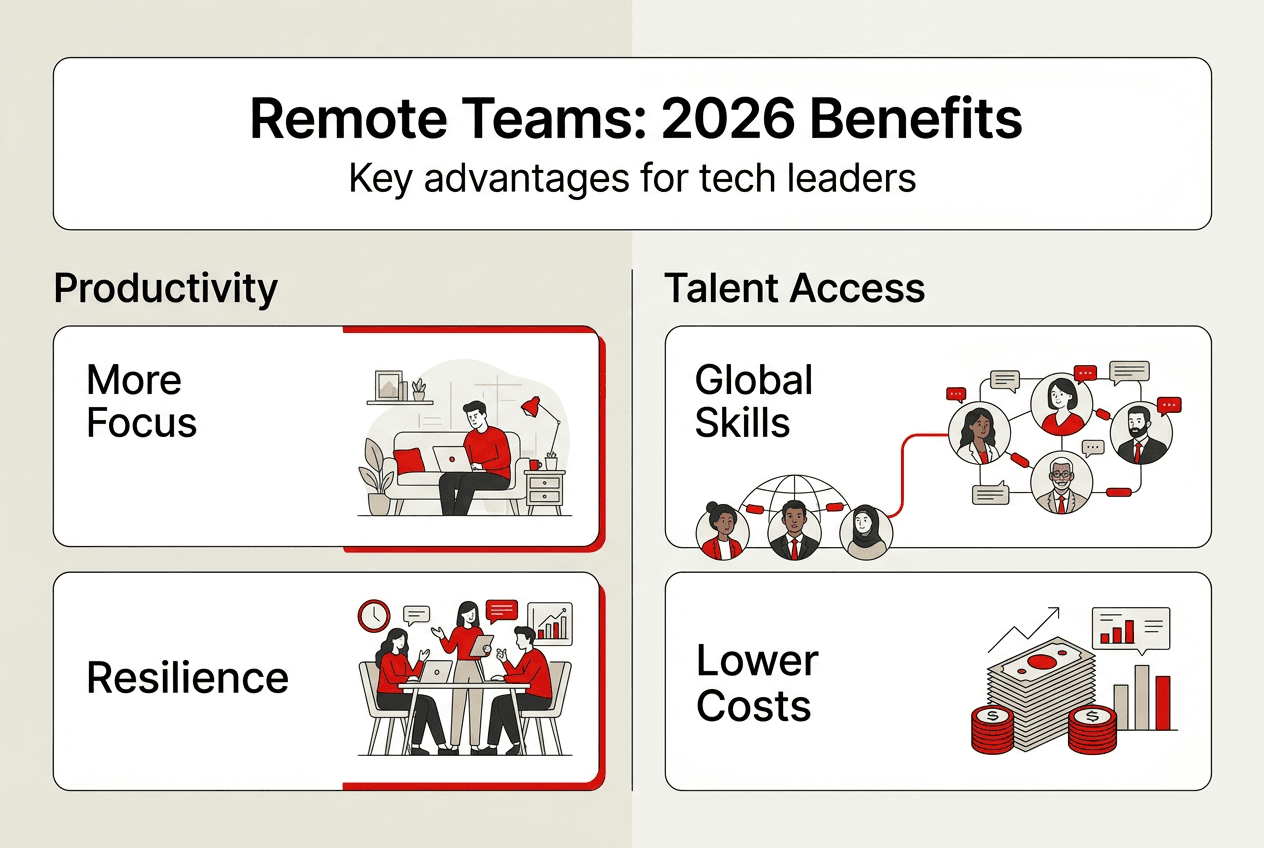
The productivity gains come from eliminating commute time, reducing meeting overhead, and allowing deep work during peak energy hours. Remote workers report fewer interruptions and more control over their environment. For tech teams specifically, the ability to code, design, or strategize during optimal focus periods translates directly to better output.
“The pandemic reduced the productivity of previously co-located teams substantially, whereas similar teams with remote work experience remained resilient.”
This resilience isn’t just about handling disruptions. It reflects a fundamental shift in how work gets done. Remote teams develop stronger written communication, clearer processes, and more inclusive decision-making. These improvements ripple through the organization, affecting team productivity and morale in measurable ways. The question for tech leaders isn’t whether remote teams can be productive. It’s whether you can afford not to build this capability.
The critical role of communication in remote team success
Communication quality directly determines whether remote teams thrive or merely survive. Poor communication creates confusion, duplication, and frustration. Excellent communication enables coordination that rivals or exceeds in-person collaboration. The difference lies in intentional system design.
Traditional offices rely on hallway conversations and impromptu desk visits. This creates information silos and excludes remote participants. Effective remote teams flip this model. They make communication visible, searchable, and inclusive by default. Every decision gets documented. Every update reaches the whole team. Context lives in shared spaces, not individual memories.
The foundation starts with choosing the right tools. Video conferencing handles face-to-face interaction. Chat platforms enable quick questions and social connection. Project management software tracks progress and accountability. Documentation tools preserve institutional knowledge. The specific brands matter less than consistent adoption across the team.
Here’s how to establish communication systems that unlock productivity:
- Choose integrated tools that work together seamlessly and meet your team’s specific needs
- Set clear protocols for what gets communicated where and expected response times for each channel
- Train everyone on both tool mechanics and communication best practices specific to remote work
- Monitor effectiveness through regular feedback and adjust systems based on actual usage patterns
These steps sound simple, but execution requires discipline. You’ll face resistance from people comfortable with old habits. Push through it. The payoff comes when new team members onboard faster, decisions happen transparently, and information flows without bottlenecks.
Pro Tip: Build in asynchronous communication as your default mode to accommodate global teams across time zones, reserving synchronous meetings only for discussions that truly require real-time interaction.
The research is clear: setting up effective online communication mitigates productivity loss and often improves on traditional methods. This isn’t theoretical. Companies that invest in communication infrastructure see measurable returns in speed, quality, and employee satisfaction. The remote work challenges that sink unprepared teams become non-issues for organizations with solid systems.
Communication excellence also affects culture. When information flows freely, trust builds naturally. Team members feel included and valued. Collaboration becomes easier because everyone has access to the same context. This creates a virtuous cycle where better communication enables better work, which reinforces communication practices.
For tech leaders building a strong remote team, communication infrastructure deserves the same attention as technical infrastructure. Invest in training, establish norms, and model the behavior you want to see. The essential remote work tools only deliver value when people use them effectively and consistently.
Accessing global talent through remote teams
Geography no longer limits who you can hire. This single fact transforms talent acquisition for tech companies. Instead of competing for the same local candidates, you can expand your talent pool by 70% by embracing remote work. That’s not a marginal improvement. It’s a complete reimagining of recruitment strategy.

The benefits extend beyond quantity. Global hiring brings specialized skills that might not exist in your local market. Need an expert in a niche technology? They’re probably not in your city, but they’re somewhere. Remote work makes them accessible. You also gain diverse perspectives that improve decision-making and product development.
Cost dynamics shift favorably too. Hiring in expensive tech hubs like San Francisco or New York means paying premium salaries for standard roles. Remote hiring lets you offer competitive compensation based on global markets while still attracting top talent. Everyone wins: employees get great opportunities, and you get better budget efficiency.
| Hiring Approach | Benefits | Challenges |
|---|---|---|
| Local Only | Easier coordination, shared time zone, potential for in-person meetings | Limited candidate pool, higher salary costs, less diversity, slower hiring |
| Global Remote | 70% larger talent pool, access to specialized skills, cost efficiency, diverse perspectives | Time zone coordination, cultural differences, legal compliance complexity |
The hiring cycle accelerates when you’re not constrained by relocation. Candidates can start immediately instead of waiting months to move. You can fill critical roles faster, maintaining project momentum. This speed advantage compounds over time as you build a reputation for efficient hiring.
Here’s what global talent access delivers:
- Access to specialized technical skills unavailable locally
- Significant salary cost savings in competitive markets
- Faster time to hire without relocation delays
- Diverse cultural perspectives that enhance innovation
- Extended operational hours through distributed time zones
The tech talent recruitment landscape has fundamentally changed. Companies that cling to local-only hiring handicap themselves. They compete with one hand tied behind their back while remote-first competitors cherry-pick the best global talent.
Smart tech leaders view remote work as a talent strategy, not just a workplace policy. They build employer brands that appeal to global candidates. They streamline international hiring processes. They create inclusive cultures where location doesn’t determine opportunity or influence. These investments pay dividends in team quality and capability.
The 70% expansion in talent pool size isn’t evenly distributed across roles. For highly specialized positions, the multiplier can be even higher. When you need someone with experience in a specific framework or domain, global reach often means the difference between finding the perfect candidate and settling for good enough. In competitive tech markets, that difference matters enormously.
Best practices to integrate and collaborate with remote teams
Hiring remote talent is the easy part. Integrating them into a cohesive, collaborative team requires intentional effort. Remote workers become better integrated when communication shifts online systematically, but that shift doesn’t happen automatically. You need to design it.
The challenge is creating belonging and connection without physical proximity. Traditional teams build relationships through lunch conversations, coffee breaks, and after-work drinks. Remote teams need digital equivalents that feel natural, not forced. This means rethinking how you onboard, communicate, and celebrate together.
| Team Type | Communication Style | Integration Approach |
|---|---|---|
| Traditional Office | Informal, synchronous, proximity-based | Organic through physical presence |
| Remote Teams | Structured, asynchronous-first, intentional | Systematic through designed touchpoints |
Successful integration starts with comprehensive onboarding. New remote employees need more than task training. They need cultural immersion, relationship building, and clear expectations about how the team operates. Pair them with a buddy who can answer the questions they don’t know to ask. Schedule regular check-ins during the first month.
Here’s what drives effective remote team collaboration:
- Foster trust through transparency in decision-making and consistent follow-through on commitments
- Conduct regular one-on-one check-ins focused on support and growth, not just status updates
- Run inclusive meetings where remote participants have equal voice and visibility
- Organize virtual social activities that build genuine connections beyond work topics
- Create documentation that captures not just what was decided, but why and by whom
Pro Tip: Implement mentorship and buddy systems that pair new remote employees with experienced team members to accelerate integration and create support networks that enhance belonging and retention.
The technology matters, but culture matters more. You can have the best collaboration tools in the world and still fail if your culture treats remote workers as second-class citizens. Every process, meeting, and decision should work equally well for distributed participants. If it doesn’t, fix the process.
Ongoing feedback loops keep integration efforts on track. Survey your team about what’s working and what isn’t. Watch for signs of isolation or disconnection. Adjust your practices based on actual experience, not assumptions. Building strong remote teams is an iterative process that improves with attention and refinement.
Social connection requires creativity in remote contexts. Virtual coffee chats, online game sessions, and digital celebrations can feel awkward at first. Persist anyway. Over time, they become valued traditions that strengthen team bonds. Some teams find that remote social activities are actually more inclusive because they don’t require commuting or exclude people with family obligations.
The integration challenge also presents an opportunity. When you’re forced to be intentional about inclusion, you often discover better practices that benefit everyone. Clear communication helps both remote and office workers. Documented decisions prevent confusion regardless of location. Overcoming remote work challenges often means solving problems that existed all along but went unnoticed.
Enhance your leadership with targeted strategies and tools
Building and leading effective remote teams requires continuous learning and adaptation. The strategies outlined here provide a foundation, but implementation depends on your specific context and challenges. That’s where additional resources become invaluable.
Tech Moths offers curated guides that help you develop the leadership skills essential for remote team success. Our professional growth strategies show you how to evolve your management approach for distributed teams. Strong communication, emotional intelligence, and adaptability matter more than ever when you can’t rely on physical presence.
The soft skills that drive remote team performance often get overlooked in technical environments. Our guide on improving workplace soft skills addresses this gap, helping you and your team build the interpersonal capabilities that make remote collaboration seamless. When combined with insights on technology in self-improvement, you’ll have a complete toolkit for developing both yourself and your team in 2026’s remote-first landscape.
Frequently asked questions
What are the main advantages of using remote teams?
Remote teams offer three core advantages: proven productivity resilience during disruptions, access to global talent pools that are 70% larger than local markets, and flexibility that improves employee satisfaction and retention. Teams with remote experience maintained output when co-located teams struggled, demonstrating superior adaptability. The talent access alone transforms hiring from a local competition into a global opportunity.
How can companies ensure remote team productivity?
Productivity comes from structured communication tools, clear expectations, and outcome-based management. Set up integrated platforms for video, chat, and project tracking before you need them. Train your team on both tool usage and remote work best practices. Focus on deliverables and results rather than monitoring activity or hours. Regular feedback loops help you identify and address issues before they impact performance.
What communication tools work best for remote teams?
The best toolkit combines video conferencing like Zoom for face-to-face interaction, asynchronous platforms like Slack or Microsoft Teams for ongoing communication, and project management software like Asana or Trello for tracking work. The specific brands matter less than ensuring tools integrate well and your team adopts them consistently. Choose based on your workflow needs and team preferences, then commit to using them systematically.
How does remote work expand access to global talent?
Remote hiring removes geographic constraints that limit traditional recruitment to a single city or region. Companies can recruit from anywhere, expanding their candidate pool by 70% and accessing specialized skills that might not exist locally. This global reach also accelerates hiring since candidates don’t need to relocate. You get faster fills, better skills matches, and often more cost-effective compensation structures based on global rather than local market rates.
What strategies help integrate remote employees effectively?
Effective integration requires frequent and inclusive communication, structured mentorship programs, and intentional social connection. Pair new hires with experienced buddies who can guide them through cultural norms and unwritten rules. Schedule regular one-on-one check-ins focused on support, not just status. Organize virtual social events that build relationships beyond work tasks. Make every meeting and process work equally well for distributed participants, ensuring remote workers never feel like outsiders.
