

Business networking guide: grow connections in 2026

You attend events, collect business cards, connect on LinkedIn, and yet meaningful opportunities remain elusive. Most professionals network reactively, missing the strategic frameworks that transform casual contacts into career-defining relationships. This guide delivers evidence-backed strategies to build authentic connections, systematically nurture relationships, and measure networking impact. You’ll learn goal-setting methods, channel selection criteria, conversation frameworks, and follow-up systems that convert networking from awkward obligation into competitive advantage. By implementing these techniques, you’ll create a sustainable network that generates referrals, partnerships, and growth opportunities aligned with your professional objectives.
Table of Contents
- Key takeaways
- Setting the foundation: defining clear goals and building your personal brand
- Choosing and using the right networking channels
- Mastering conversations and follow-up for lasting connections
- Measuring and optimizing your networking efforts
- Explore education and career development resources at TechMoths
- Frequently asked questions
Key Takeaways
| Point | Details |
|---|---|
| Set SMART goals | Define specific, measurable, achievable, relevant, and time bound outcomes to guide your networking. |
| Build a personal brand | Create a consistent message across LinkedIn, your profile, and other pages to signal value and differentiate you. |
| Map your network | Develop an ideal network map that targets specific roles, industries, and organizations to focus outreach. |
| Use multiple channels | Leverage LinkedIn, events, associations, and referral networks to create high quality opportunities instead of chasing random contacts. |
| Track progress with KPIs | Measure networking results with key performance indicators to optimize approaches and increase referrals. |
Setting the foundation: defining clear goals and building your personal brand
Random networking wastes time and energy. Without direction, you’ll attend events that don’t serve your objectives and connect with people outside your target network. Effective networking strategies include defining SMART goals, crafting personal brands, and using various channels strategically.
Start by establishing SMART goals. Specific means naming exact outcomes like “connect with three venture capital partners” rather than “meet investors.” Measurable requires numbers you can track weekly. Achievable keeps targets realistic given your schedule and resources. Relevant ensures goals align with career milestones, whether you’re seeking clients, mentors, or partnership opportunities. Time-bound creates urgency with deadlines like “by end of Q2 2026.”
Your personal brand determines who approaches you and how they perceive your value. Think of it as your professional reputation distilled into consistent messaging and visuals. Strong brands communicate expertise, values, and unique perspectives that differentiate you from competitors. Elements include your LinkedIn headline, profile photo quality, content you share, speaking topics, and how you describe your work.

Create an ideal network map by listing specific roles, industries, and organizations where your targets work. If you’re launching a SaaS product, your map might include CTOs at mid-market companies, product managers at enterprise firms, and founders in adjacent spaces. This focus prevents diluted efforts across irrelevant contacts.
Actionable steps to build your brand:
- Audit your online presence across LinkedIn, personal website, and professional profiles for consistency
- Write a compelling value proposition that explains who you help and how in one sentence
- Identify three topics where you can demonstrate thought leadership through content
- Update profile photos to professional headshots with consistent backgrounds
- Share valuable insights weekly to establish expertise and visibility
Pro Tip: Create a “networking resume” separate from your job resume. List your superpowers, the problems you solve, and interesting personal facts. Reference this before events to remind yourself what makes you memorable and valuable to others.
Integrating lifestyle branding principles helps you present an authentic, differentiated professional identity that resonates with your target network.
Choosing and using the right networking channels
Not all networking channels deliver equal returns. Your personality, goals, and target audience determine which platforms deserve your attention. Channels like LinkedIn and events provide high-quality connection opportunities when used strategically.
Main networking channels include:
- LinkedIn for asynchronous relationship building and content visibility
- Industry conferences and trade shows for concentrated face-to-face interactions
- Professional associations and membership groups for ongoing community engagement
- Referral networks and mastermind groups for trusted introductions
- Virtual events and webinars for geographic flexibility
Each channel offers distinct advantages. LinkedIn is more efficient than traditional events for certain goals, particularly when targeting specific roles or companies. The platform enables research before outreach, allows thoughtful messaging, and creates permanent visibility through your profile and content.
| Channel | Best For | Time Investment | Connection Quality | Introvert Friendly |
|---|---|---|---|---|
| Targeted outreach, thought leadership | 5-7 hours/week | High if personalized | Very | |
| Conferences | Industry immersion, multiple contacts | 2-3 days/event | Medium to high | Moderate |
| Associations | Long-term community, leadership roles | 3-5 hours/month | High over time | Very |
| Referral Groups | Qualified introductions, accountability | 2-4 hours/week | Very high | Moderate |
| Virtual Events | Geographic reach, lower barrier | 1-2 hours/event | Medium | Very |
Select channels using this ranked process:
- Map your SMART goals to channels where your targets actively participate
- Assess your communication strengths (writing versus speaking, one-on-one versus groups)
- Calculate realistic time budgets and allocate to highest-ROI channels
- Test two to three channels simultaneously for eight weeks
- Measure results against KPIs and double down on winners
Introverts thrive using the wingman strategy. Partner with a colleague or friend who complements your style. They handle initial introductions while you engage in deeper one-on-one conversations. Prepare conversation starters in advance and set a target of three meaningful exchanges rather than collecting dozens of cards.
Quality trumps quantity. Aim for 10 to 15 meaningful new connections weekly rather than 50 superficial ones. Meaningful means you’ve had substantive conversation, identified mutual interests or opportunities, and established a reason for follow-up.
Leveraging social media for business extends your networking reach while maintaining authenticity and strategic focus across platforms.
Mastering conversations and follow-up for lasting connections
Initial contact means nothing without quality conversation and systematic follow-up. The difference between a forgotten handshake and a valuable relationship lies in how you engage and nurture connections. Using the FORM framework and systematic follow-up increases pipeline growth and trust significantly.
The FORM framework structures conversations around four topics: Family, Occupation, Recreation, and Message. Family includes personal background and interests that build rapport. Occupation explores their work, challenges, and goals. Recreation uncovers hobbies and passions that reveal personality. Message delivers your value proposition when appropriate. This sequence feels natural while gathering information to personalize future interactions.
Apply FORM strategically:
- Start with Recreation or Family to ease tension and find common ground
- Transition to Occupation once rapport develops, asking about challenges before pitching solutions
- Listen actively for pain points, goals, and language they use to describe their work
- Share your Message only when relevant to their stated needs or interests
- Close by proposing a specific next step rather than vague “let’s stay in touch”
Systematic follow-up converts contacts into relationships. Handwritten follow-ups within 24-48 hours enhance relationship building by demonstrating genuine interest and professionalism. Most people never follow up, so timely outreach immediately differentiates you.
Implement a 30-60-90 day follow-up framework:
- Within 24 to 48 hours: Send personalized note referencing specific conversation points
- At 30 days: Share relevant article, introduction, or resource aligned with their interests
- At 60 days: Invite to coffee, virtual meeting, or event to deepen relationship
- At 90 days: Check in with genuine interest in their progress or offer assistance
Personalization matters more than perfection. Reference the conference session you both attended, the challenge they mentioned, or the mutual contact who introduced you. Generic templates destroy trust while specific details prove you were present and engaged.
Improving conversation quality requires preparation and practice. Research attendees before events using LinkedIn. Prepare three open-ended questions about industry trends or challenges. Practice active listening by summarizing what you heard before responding. Avoid premature pitching by focusing 80% on learning about them and 20% on sharing your story.
Pro Tip: Keep a simple spreadsheet tracking new contacts with columns for name, date met, conversation highlights, promised follow-up, and next touchpoint date. Review weekly to ensure no one falls through cracks. This system alone can double your relationship conversion rate.
Building relationships with experienced professionals becomes easier when you understand connecting with startups mentors and apply similar principles to broader networking contexts. Additionally, learning to monitor your work network helps you maintain relationship health and identify opportunities.
Measuring and optimizing your networking efforts
What gets measured gets improved. Without tracking, you can’t identify which channels, conversations, or follow-up methods generate results. Measuring KPIs improves networking efficiency and outcomes by revealing patterns and opportunities for optimization.
Key performance indicators for networking include:
- New meaningful connections made per week or month
- Meetings or calls scheduled from networking outreach
- Referrals and introductions received from network contacts
- Opportunities generated (partnerships, clients, speaking engagements)
- Response rates to follow-up messages
- Time invested per channel versus results produced
Research shows entrepreneurial networks positively influence SME performance, making measurement critical for maximizing business impact.
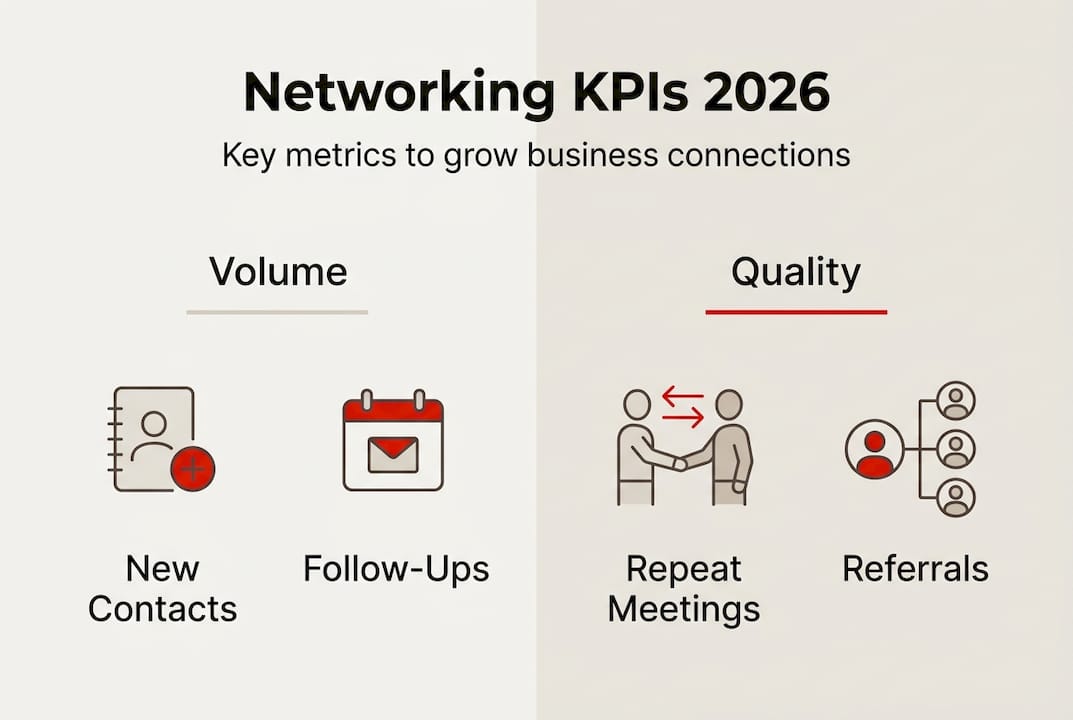
| KPI | How to Track | Target Benchmark | Optimization Signal |
|---|---|---|---|
| New Connections | Weekly count in CRM or spreadsheet | 10-15 quality contacts | Below 10 = increase activity |
| Meeting Conversion | Meetings scheduled / contacts made | 20-30% | Below 15% = improve follow-up |
| Referral Rate | Introductions received / active relationships | 5-10% monthly | Below 5% = deepen relationships |
| Opportunity Value | Revenue or partnerships from network | Varies by industry | Track trends over quarters |
| Channel ROI | Results per hour invested by channel | Compare across channels | Shift time to highest ROI |
Tools and methods for monitoring include customer relationship management systems like HubSpot or Pipedrive for tracking interactions, simple spreadsheets for smaller networks, calendar blocking to measure time investment, and quarterly reviews comparing results to SMART goals.
Iterative improvement follows a simple cycle. Every month, review your KPIs and ask: Which channel produced the most valuable connections? Which follow-up messages got the best responses? Which conversations led to opportunities? Then adjust your strategy by increasing time on high-performing channels, refining messaging based on what resonates, and eliminating low-ROI activities.
Test one variable at a time. If you change your LinkedIn headline, follow-up timing, and event selection simultaneously, you won’t know which drove improved results. Modify one element, measure for four to six weeks, then adjust based on data.
Common optimization opportunities include shifting from evening events to breakfast meetings if you’re sharper mornings, focusing on smaller gatherings over large conferences if depth matters more than breadth, or doubling down on content creation if LinkedIn engagement drives more inbound connections than outbound outreach.
Understanding measuring networking success through relevant startup metrics provides additional frameworks for tracking relationship-building effectiveness.
Explore education and career development resources at TechMoths
Networking skills develop through continuous learning and adaptation to changing professional landscapes. Whether you’re navigating economic uncertainty or advancing in competitive industries, expanding your knowledge base strengthens your networking effectiveness.
TechMoths offers curated resources to support your professional growth journey. Discover practical guidance on pursuing education opportunities in turbulent times that can help you stay competitive while building valuable connections in educational settings. Explore actionable career development steps specifically designed for advancing in technology and related fields.
Strengthening your personal brand amplifies networking impact by making you more memorable and attractive to ideal connections. Learn foundational principles of lifestyle branding to craft an authentic professional identity that resonates across channels and conversations. These resources complement the networking strategies you’ve learned, providing deeper expertise in areas that support relationship-building success.
Frequently asked questions
How do I set effective networking goals?
Use SMART criteria to create actionable objectives. Specific goals name exact outcomes like “connect with five marketing directors at SaaS companies.” Measurable means tracking weekly numbers, achievable keeps targets realistic given your schedule, relevant aligns with career milestones, and time-bound adds deadlines. Set weekly connection targets like 10 to 15 high-quality contacts rather than vague intentions to “network more.”
What is the best way to follow up after meeting someone new?
Send a personalized note within 24 to 48 hours, handwritten if possible for maximum impact. Reference specific conversation points like the challenge they mentioned or the mutual interest you discovered. Use a 30-60-90 day follow-up plan: share relevant resources at 30 days, invite to meeting at 60 days, and check in at 90 days. This systematic approach prevents contacts from going cold while demonstrating genuine interest.
How can introverts network effectively at events?
Use the wingman strategy by partnering with a colleague who handles initial introductions while you focus on deeper one-on-one conversations. Prepare conversation topics using the FORM framework (Family, Occupation, Recreation, Message) so you’re never caught without something to discuss. Focus on quality over quantity by targeting three meaningful exchanges rather than collecting dozens of business cards. Arrive early when crowds are smaller and energy is higher.
What metrics should I track to assess networking success?
Track number of meaningful new contacts weekly, meetings or calls scheduled from outreach, and referrals or introductions received from your network. Measure opportunities generated such as partnerships, clients, or speaking engagements that result from connections. Evaluate progress towards your SMART networking goals monthly and calculate channel ROI by comparing time invested to results produced. Aim for 20 to 30 percent meeting conversion rate and 5 to 10 percent monthly referral rate from active relationships.
