

Why fashion evolves: cultural and social shifts explained

Most people believe fashion changes simply because designers decide to launch new collections. This oversimplification ignores the complex interplay of cultural movements, technological breakthroughs, economic pressures, and social behaviors that truly drive style evolution. Fashion reflects deeper societal transformations, making it a powerful lens for understanding human culture. This guide explores the multifaceted forces that shape what we wear and why those changes happen.
Table of Contents
- Introduction To Fashion Evolution
- Cultural Influences On Fashion Evolution
- Technological Impact On Design And Materials
- Economic And Social Factors Driving Trends
- Common Misconceptions About Fashion Change
- Historical Case Studies Illustrating Fashion Shifts
- Frameworks For Understanding Fashion Evolution
- Conclusion: Applying Understanding To Future Trends
- Explore More Educational Insights With Tech Moths
- Frequently Asked Questions
Key takeaways
| Point | Details |
|---|---|
| Cultural forces drive fashion | Fashion reflects societal values and social movements reshape clothing symbolism. |
| Technology accelerates change | Digital tools and synthetic materials compress design and production cycles dramatically. |
| Economic conditions matter | Consumer spending patterns during booms and recessions directly influence trend adoption. |
| Social media shortens cycles | Platforms enable rapid trend spread, collapsing traditional seasonal fashion timelines. |
| Frameworks predict trends | Multi-factor models combining culture, tech, and economics help forecast style shifts. |
Introduction to fashion evolution
Fashion evolution describes the ongoing transformation of clothing styles, silhouettes, and aesthetic preferences driven by interconnected cultural, technological, economic, and social factors. This process extends far beyond seasonal runway shows, encompassing centuries of human expression through dress.
Historically, fashion cycles unfolded over decades. Classical Greek draped garments gave way to structured Renaissance corsets, which eventually yielded to modernist minimalism. Each shift corresponded with broader societal changes in values, technology, and social organization. Understanding these patterns reveals how clothing serves as visual language for cultural identity.
Why does this matter? Fashion evolution provides insight into collective human psychology and social priorities. When hemlines rise or fall, when silhouettes expand or contract, these changes signal deeper transformations in how societies view gender, class, individuality, and power. Modeling careers rise and fall with these broader cultural tides.
Recognizing fashion as dynamic cultural expression rather than arbitrary designer whim helps decode the visual messages surrounding us daily. The same analytical frameworks apply across industries; just as startup trends reflect economic conditions, fashion trends mirror societal evolution. This connection between appearance and culture makes fashion history essential for understanding human civilization itself.
Key aspects of fashion evolution include:
- Interconnected influence of multiple societal forces
- Cyclical patterns combining innovation with nostalgic revival
- Acceleration of change corresponding to communication technology advances
- Symbolic meaning embedded in material choices and silhouettes
Cultural influences on fashion evolution
Fashion simultaneously mirrors and shapes cultural values, creating a feedback loop where clothing both reflects existing norms and catalyzes social change. This dynamic relationship makes fashion a powerful tool for expressing collective identity and challenging established hierarchies.
Consider how social movements directly influence fashion through symbolic clothing and material choices. The feminist movement of the 1960s popularized pantsuits for women, challenging gender norms through deliberate wardrobe choices. Civil rights era fashion embraced African-inspired prints and natural hairstyles as political statements affirming cultural pride. These weren’t random aesthetic shifts but intentional expressions of ideology through appearance.
“Fashion reflects societal values and cultural identities, evolving as societies undergo shifts in norms and collective self-expression.”
Clothing choices function as visual manifestations of belief systems. Punk fashion rejected mainstream consumer culture through deliberately torn garments and safety pin accessories. Minimalist fashion movements respond to overconsumption anxiety by embracing capsule wardrobes. Each stylistic choice carries meaning beyond mere aesthetics.
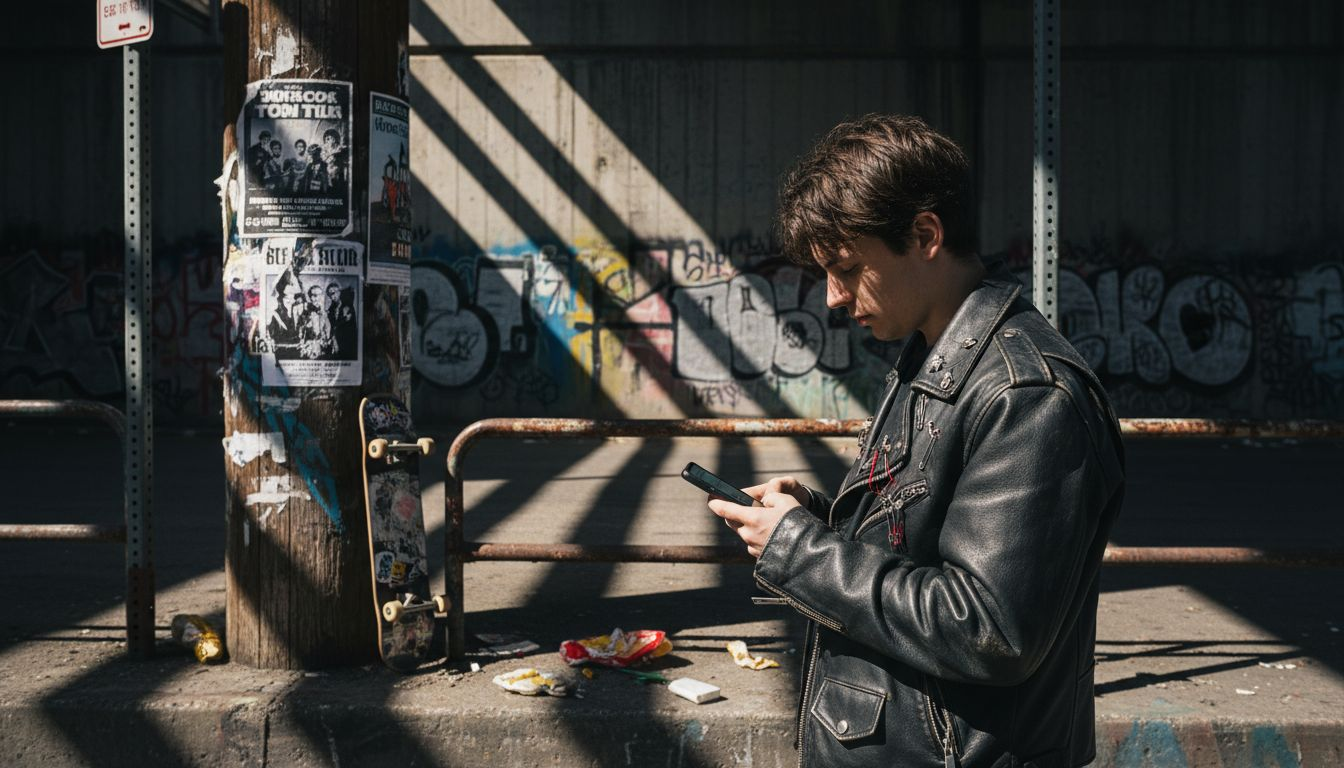
Cultural shifts drive fashion cycles across generational timescales. Post-war prosperity in the 1950s encouraged elaborate, fabric-intensive designs celebrating abundance. Economic uncertainty in later decades prompted streamlined, practical styles. The connection between cultural symbolism and fashion choices extends across domains, from clothing to iconography.
Major cultural influences on fashion include:
- Social justice movements reshaping acceptable dress codes
- Religious and spiritual traditions informing modesty standards
- Youth subcultures challenging mainstream aesthetic norms
- National identity expressions through traditional garment revival
- Environmental consciousness driving sustainable material choices
Technological impact on design and materials
Technological innovation fundamentally transforms fashion by introducing new materials, production methods, and design tools that expand creative possibilities while compressing development timelines. These advances democratize fashion access and enable rapid trend proliferation.
Synthetic fiber development revolutionized fashion in the 20th century. Nylon, polyester, and spandex created garment properties impossible with natural fibers, from wrinkle resistance to stretch capabilities. Digital printing technology eliminated color and pattern limitations, allowing designers to produce complex graphics at scale. 3D printing now enables custom-fit garments and experimental structures previously unimaginable.
Artificial intelligence design tools accelerate trend forecasting and pattern generation. Machine learning algorithms analyze vast datasets to predict emerging preferences, while automated design software generates countless variation options within parameters. This technological acceleration mirrors changes across industries, as technology transforms engineering markets and reshapes various sectors.
Faster production cycles compress fashion seasons from traditional six-month timelines to weekly fast fashion releases. Digital manufacturing and supply chain optimization enable brands to move from concept to retail within days. This speed fundamentally alters consumer expectations and trend lifecycles.
Pro Tip: Monitor emerging technologies like smart textiles with embedded sensors and color-changing fabrics. These innovations will disrupt fashion by merging clothing with functionality beyond appearance.
Key technological drivers include:
- Computer-aided design software expanding creative possibilities
- Advanced textile engineering creating performance fabrics
- Supply chain digitization enabling rapid manufacturing response
- Social media platforms functioning as instant trend distribution networks
- Virtual fashion and digital garments emerging in metaverse spaces
The intersection of technology and education parallels fashion’s technological transformation, while B2B sales processes experience similar disruption.
Economic and social factors driving trends
Economic conditions and social dynamics profoundly influence fashion preferences, determining both what styles emerge and how quickly trends cycle through adoption and obsolescence. Consumer purchasing power and media consumption patterns shape the fashion landscape.
Economic prosperity typically encourages fashion experimentation and conspicuous consumption. During boom periods, consumers invest in statement pieces, luxury brands flourish, and avant-garde designs gain traction. Recessions shift preferences toward practical, versatile basics emphasizing value and longevity. The 2008 financial crisis popularized minimalist wardrobes focused on quality staples over trendy items.
Social media fundamentally transformed trend velocity. Instagram, TikTok, and Pinterest accelerate adoption by exposing millions to new styles instantly. A garment photographed on a celebrity can sell out globally within hours. This compression contrasts sharply with pre-digital fashion cycles.
| Aspect | Traditional Fashion Cycle | Social Media Era |
|---|---|---|
| Trend Duration | 12-24 months typical lifespan | 3-6 months before saturation |
| Adoption Speed | Gradual regional spread over seasons | Simultaneous global awareness |
| Influencers | Fashion magazines and runway shows | Micro-influencers and viral content |
| Consumer Role | Passive trend recipients | Active participants and co-creators |
The contrast between bespoke high fashion and fast fashion consumption illustrates economic stratification in style access. Haute couture represents exclusive, handcrafted luxury for elite consumers. Fast fashion democratizes trend participation through affordable mass production, though often at environmental and labor costs.
Pro Tip: Track consumer confidence indices and discretionary spending data as leading indicators for upcoming fashion shifts. Economic sentiment often predicts style preferences months before runway collections debut.
Social factors driving fashion include:
- Peer influence and community belonging expressed through shared aesthetics
- Celebrity and influencer endorsements creating instant demand spikes
- Generational identity formation through distinctive style markers
- Status signaling through brand visibility and luxury consumption
Common misconceptions about fashion change
Several persistent myths obscure the true mechanisms driving fashion evolution, leading to oversimplified understanding of complex cultural phenomena. Clarifying these misconceptions reveals fashion’s genuine dynamics.
Myth: Designers alone control fashion direction. Reality involves complex interaction between designers, consumers, manufacturers, retailers, and media gatekeepers. Consumer adoption ultimately determines which designs succeed. Designers propose options, but market forces select winners. The fashion industry operates through collaborative negotiation, not top-down dictation.
Myth: Fashion change is chaotic and unpredictable. While specific details surprise, underlying patterns follow predictable cycles tied to cultural, economic, and technological factors. Trend forecasters successfully anticipate directional shifts by analyzing these drivers. Apparent randomness reflects information complexity, not true chaos.
Myth: Trends are entirely novel creations. Fashion operates cyclically, constantly revisiting and reinterpreting past eras. The 2020s revival of 1990s minimalism and 2000s Y2K aesthetics demonstrates this pattern. Designers remix historical references with contemporary context, creating “new” styles rooted in tradition. True innovation exists, but most change represents recombination.
Myth: Fashion evolution happens uniformly across demographics. Style changes spread unevenly through age groups, geographic regions, and social classes. Youth subcultures often pioneer trends later adopted by mainstream consumers. Urban centers experience faster fashion turnover than rural areas. Economic stratification creates parallel fashion ecosystems with different change velocities.
Understanding authentic fashion mechanisms requires recognizing consumer agency, cyclical patterns, and demographic variation. Fashion misconceptions parallel broader cultural misunderstandings about symbolic systems.
Historical case studies illustrating fashion shifts
Examining specific historical transitions reveals concrete mechanisms through which external forces drive fashion evolution. These examples demonstrate theory in practice.
The Victorian to Modernist era shift (1890s-1920s) exemplifies technological and cultural transformation. Victorian fashion featured restrictive corsets, voluminous skirts, and elaborate ornamentation reflecting rigid social hierarchies. World War I disrupted this system as women entered industrial workforces requiring practical clothing. Simultaneously, new textile manufacturing enabled simpler garment construction. The resulting 1920s flapper aesthetic, with dropped waists and shorter hemlines, symbolized women’s liberation and modernity.
1960s social movements profoundly impacted fashion through deliberate symbolic choices. The civil rights movement popularized dashikis and Afros celebrating African heritage. Anti-war protesters adopted casual, anti-establishment styles rejecting corporate dress codes. Youth culture embraced miniskirts and bold patterns expressing generational rebellion. These weren’t passive style changes but active political statements through appearance.
The digital era (2000s-2020s) compressed fashion cycles through social media and e-commerce. Traditional seasonal collections gave way to constant product drops. Influencer culture democratized trendsetting beyond elite fashion editors. Fast fashion brands could replicate runway looks within weeks. This acceleration fundamentally altered fashion’s temporal structure.
| Era | Primary Drivers | Fashion Outcomes | Timeline |
|---|---|---|---|
| Victorian to Modernist | WWI labor needs, textile tech | Simplified silhouettes, practical designs | 1890s-1920s |
| 1960s Revolution | Civil rights, feminism, youth culture | Symbolic clothing, casual styles | 1960-1975 |
| Digital Acceleration | Social media, e-commerce, fast fashion | Compressed cycles, influencer culture | 2000s-present |
These cases demonstrate how fashion reflects societal values during transformation periods. The connection between cultural change and clothing choices remains consistent across centuries. Historical patterns provide templates for understanding contemporary shifts, as modeling career trajectories align with broader fashion industry evolution.
Frameworks for understanding fashion evolution
Conceptual models integrating multiple influence factors enable systematic analysis and prediction of fashion changes. These frameworks transform chaotic-seeming style shifts into comprehensible patterns.
The multi-factor evolution model synthesizes cultural, technological, economic, and social drivers into unified analysis. Rather than attributing change to single causes, this approach recognizes interconnected influences. A trend’s emergence might combine technological material innovations, cultural movement symbolism, and economic accessibility simultaneously. Understanding requires examining all dimensions.
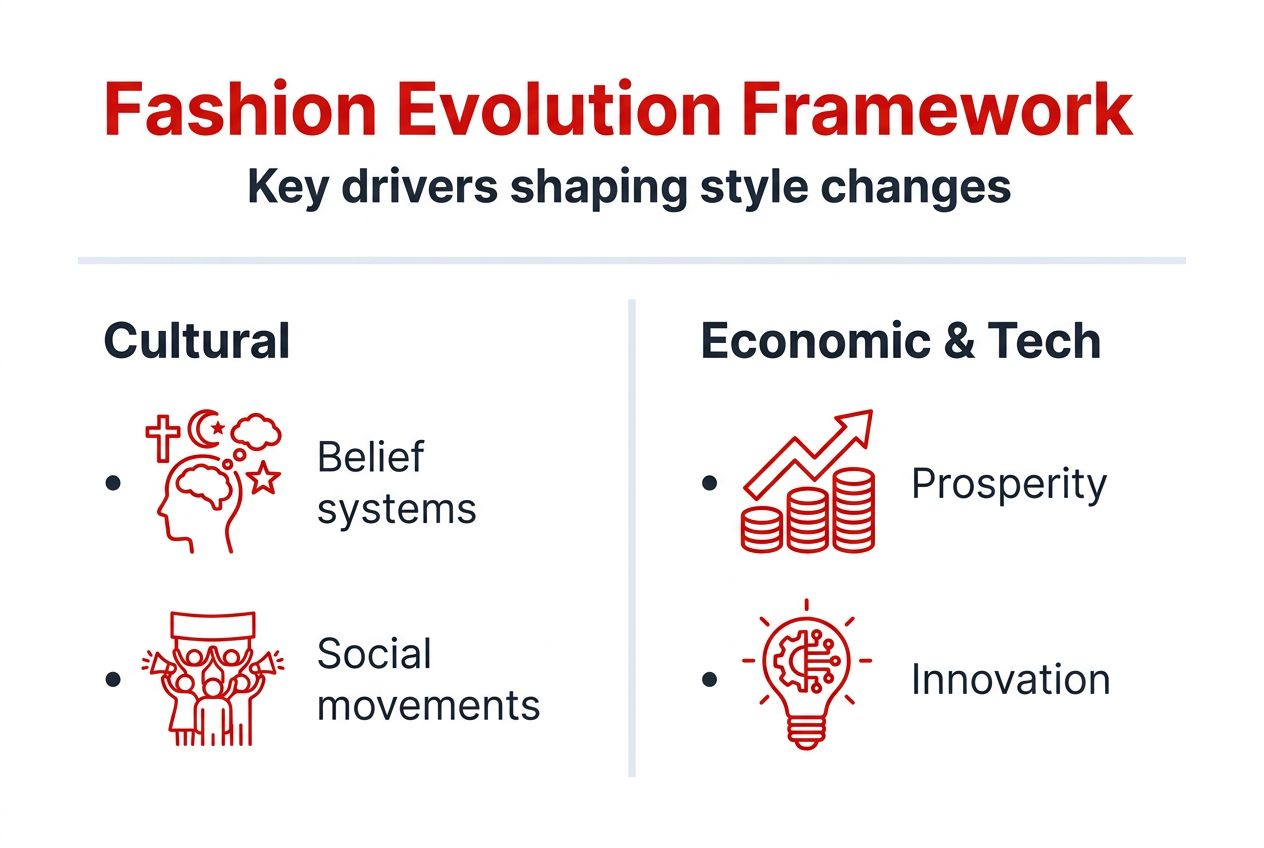
Quantitative fashion research supports predictable cyclicality. Studies document approximately 20-year revival cycles as new generations rediscover styles from their pre-memory youth. Hemline lengths correlate with economic indicators. Color preferences shift with political climates. These patterns enable forecasting based on current condition analysis.
Applying frameworks to contemporary trends reveals underlying logic. Cottagecore aesthetic’s 2020s popularity combined pandemic-driven nature nostalgia (cultural), social media visual sharing (technological), and economic uncertainty encouraging DIY skills (economic). The framework clarifies why this specific aesthetic resonated at this particular moment.
| Framework Component | Role in Fashion Evolution | Analysis Questions |
|---|---|---|
| Cultural Factors | Provide symbolic meaning and values expression | What social movements are gaining momentum? |
| Technological Factors | Enable new materials and production methods | What innovations are entering mass production? |
| Economic Factors | Determine accessibility and consumption patterns | How is consumer confidence trending? |
| Social Factors | Drive adoption through networks and influence | Which communities are setting aesthetic direction? |
Framework application benefits:
- Systematic trend analysis replacing intuition-based guessing
- Prediction of emerging styles before mainstream adoption
- Understanding why certain designs succeed while others fail
- Historical pattern recognition informing future forecasts
These models function across domains. Just as frameworks analyze fashion evolution, similar approaches decode broader cultural shifts and market dynamics.
Conclusion: applying understanding to future trends
Fashion evolution results from complex interplay between cultural values, technological capabilities, economic conditions, and social behaviors rather than designer whim alone. Recognizing these interconnected drivers transforms fashion from mysterious phenomenon into comprehensible cultural expression.
Cultural forces provide fashion’s symbolic foundation. Social movements, generational identity formation, and collective value shifts manifest through clothing choices. Technology accelerates change by introducing novel materials and compressing production timelines. Economic conditions determine purchasing patterns and accessibility. Social dynamics, especially digital media, govern adoption velocity and trend spread.
Applying multi-factor frameworks enables practical trend analysis. Observe cultural movements gaining momentum. Track technological innovations entering commercial viability. Monitor economic indicators affecting consumer confidence. Analyze social media conversations revealing emerging aesthetic preferences. These data points collectively signal directional fashion shifts months before mainstream recognition.
Future fashion will likely emphasize sustainability as environmental consciousness grows, incorporate smart textiles merging function with aesthetics, and feature increasingly personalized designs enabled by AI and on-demand manufacturing. However, fundamental human needs for self-expression, community belonging, and status signaling will continue driving fashion evolution regardless of specific stylistic details.
Key takeaways for trend anticipation:
- Watch broader societal signals beyond fashion industry announcements
- Recognize cyclical patterns while identifying genuine innovations
- Understand that consumer adoption ultimately determines success
- Appreciate fashion as dynamic reflection of human culture
This knowledge transforms fashion observation from passive consumption into active cultural analysis. Understanding why styles change enriches appreciation for clothing’s role in human expression. Elegant fashion strategies become more effective when grounded in evolution principles.
Explore more educational insights with Tech Moths
Understanding complex systems like fashion evolution requires the same analytical thinking that drives effective learning across domains. Tech Moths offers extensive educational content exploring how cultural, technological, and social forces shape various fields beyond fashion.
Explore personalized learning tactics that adapt to individual needs, much like fashion adapts to cultural contexts. Discover education opportunities during uncertainty that parallel fashion’s resilience through changing conditions. Learn about lifestyle transformation processes that mirror fashion’s evolution mechanisms.
Tech Moths provides research-backed guides across education, lifestyle, and cultural topics, helping you navigate evolving environments with confidence. Just as understanding fashion’s drivers empowers better style choices, comprehending learning principles enables more effective personal development. Visit Tech Moths to expand your knowledge across interconnected domains shaped by cultural and societal change.
Frequently asked questions
Why does fashion change so quickly nowadays?
Social media platforms dramatically accelerate trend adoption by exposing millions to new styles simultaneously rather than through gradual geographic spread. Technological advances in manufacturing enable brands to move from design concept to retail availability within weeks, compressing traditional seasonal cycles into constant product releases. Consumer expectations have adapted to this velocity, creating demand for continuous novelty.
Is fashion evolution purely driven by designers?
Fashion evolution involves complex interaction between designers, consumers, media, manufacturers, and cultural movements rather than designer control alone. Consumer adoption determines which proposed styles succeed commercially, giving buyers significant influence over directional trends. Cultural context and social movements provide symbolic meaning that makes certain aesthetics resonate while others fail, regardless of designer intent or skill. Fashion misconceptions oversimplify these collaborative dynamics.
Can understanding fashion evolution help predict future trends?
Multi-factor analytical frameworks provide systematic insight into emerging trends by examining cultural movements, technological innovations, economic indicators, and social media conversations collectively. While specific details remain unpredictable, directional shifts become foreseeable when analyzing these interconnected drivers. Professional trend forecasters successfully anticipate style changes months ahead by applying these analytical methods, demonstrating practical prediction value. Strategic fashion approaches benefit from evolution understanding.
Are fashion trends completely new or just recycled ideas?
Fashion operates primarily through cyclical reinterpretation of historical styles rather than purely original creation. Approximately 20-year revival cycles bring past aesthetics back as new generations rediscover pre-memory eras with fresh perspective. Designers remix vintage references with contemporary materials and cultural context, creating hybrid styles that feel both familiar and novel. True innovation exists in materials and construction techniques, but most aesthetic change represents recombination rather than invention.
