

SEO Trends in 2026: Shaping Global Strategies

Search strategies that once delivered reliable results are quickly losing their impact as advanced AI engines transform how information is found. For Digital marketers and SEO specialists, adapting to shifting user behaviors and evolving machine comprehension is now a priority. This article explores the machine readability revolution and highlights the misconceptions holding brands back, guiding you toward smarter, omnichannel approaches that anticipate both algorithmic and human needs for 2026.
Table of Contents
- Defining SEO Trends For 2026 And Common Misconceptions
- Types Of AI-Driven Search And Generative Engine Optimization
- Omnichannel SEO: Expanding Beyond Traditional Search
- E-E-A-T, Brand Authority, And Structured Data Requirements
- Risks Of Zero-Click Search And Measurement Challenges
- Avoiding Common Mistakes In Adapting To 2026 Trends
Key Takeaways
| Point | Details |
|---|---|
| Shift to AI-Driven SEO | Embrace context and user intent over traditional keyword matching to enhance search visibility. |
| Omnichannel Strategy | Develop a cohesive online presence across multiple platforms to maintain engagement and brand consistency. |
| Prioritize E-E-A-T | Focus on Experience, Expertise, Authoritativeness, and Trust to build credibility and meet modern search expectations. |
| Adapt to Zero-Click Searches | Shift measurement techniques to focus on brand visibility and information authority rather than just traffic metrics. |
Defining SEO Trends for 2026 and Common Misconceptions
The digital marketing landscape is undergoing a radical transformation, driven by artificial intelligence and evolving search technologies. Emerging search dynamics will fundamentally reshape how brands approach online visibility in 2026, moving far beyond traditional keyword optimization strategies.
Traditional SEO approaches are becoming obsolete as machine learning algorithms prioritize contextual relevance over simple keyword matching. The new paradigm demands a more sophisticated approach that centers on:
- Understanding user intent with granular precision
- Creating interconnected content ecosystems
- Developing multi-channel content strategies
- Optimizing for machine comprehension
- Personalizing user experiences
Search engines are increasingly using advanced AI to interpret content quality, user engagement, and semantic relationships. This means brands must focus on creating genuinely valuable, interconnected content that demonstrates deep subject matter expertise. Machine readability will become as crucial as human readability, requiring content strategies that communicate effectively with both algorithmic systems and human readers.
Common misconceptions about SEO in 2026 persist, with many marketers still clinging to outdated tactics. Personalized search experiences will render traditional ranking approaches ineffective, demanding a more nuanced, adaptive strategy that anticipates user needs before they are explicitly expressed.
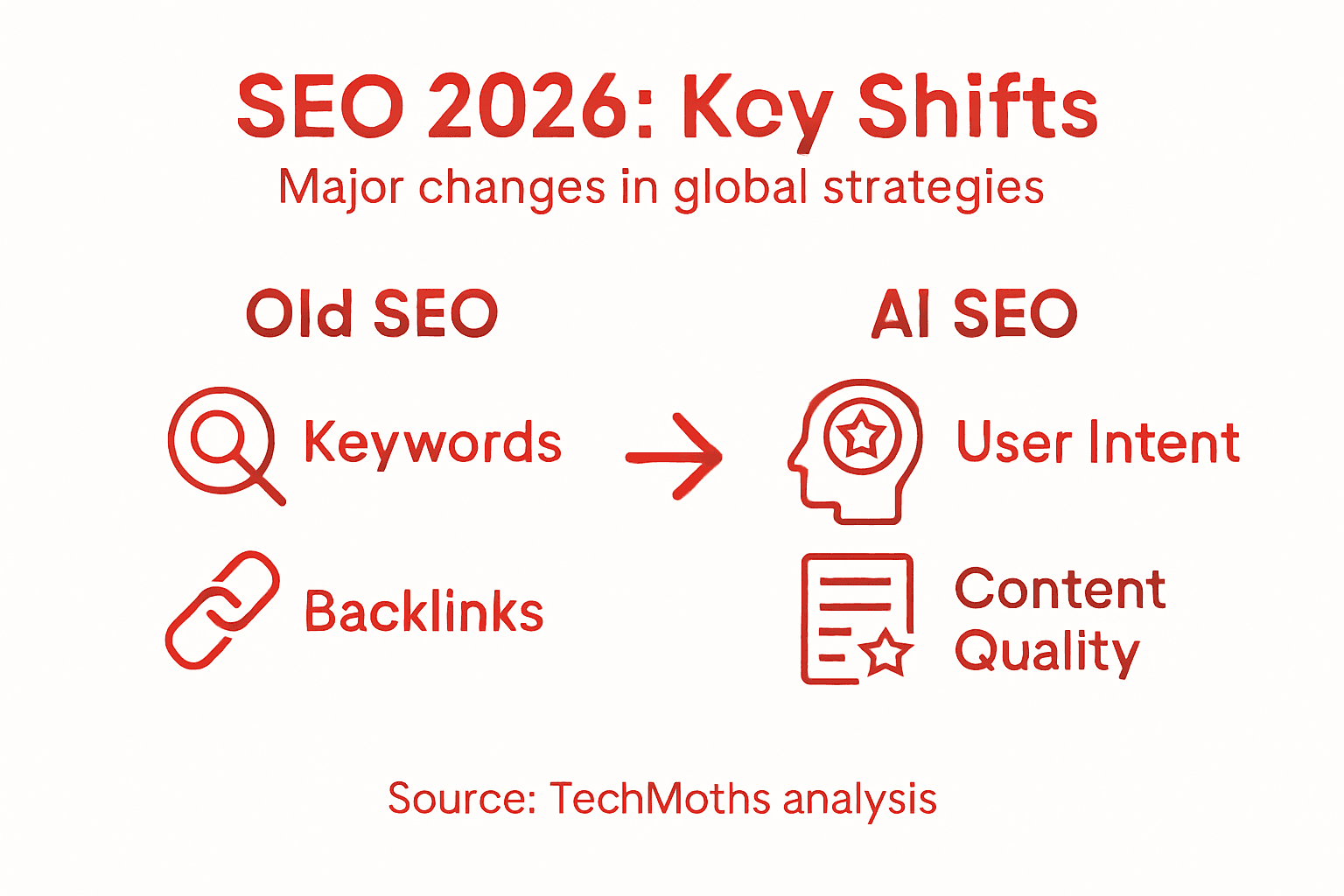
Here’s a comparison of traditional vs. AI-driven SEO priorities for 2026:
| Aspect | Traditional SEO | AI-Driven SEO 2026 |
|---|---|---|
| Keyword Focus | High, exact matches | Contextual, intent-based |
| Content Structure | Standalone pages | Interconnected ecosystems |
| Algorithm Understanding | Basic algorithmic cues | Complex AI comprehension |
| Personalization | Minimal | Deep, dynamic personalization |
| Measurement | Click-through, rankings | Brand visibility, citations |
Pro tip: Invest in AI-powered content intelligence tools that can help you understand and predict user intent across multiple platforms and search contexts.
Types of AI-Driven Search and Generative Engine Optimization
The emergence of artificial intelligence has fundamentally transformed search technologies, introducing complex generative search paradigms that challenge traditional digital marketing strategies. Unlike conventional search engines, these new AI-powered systems synthesize information dynamically, creating unique challenges for content creators and marketers.
AI-driven search technologies can be categorized into several distinct types:
- Generative Search Engines: Produce original summaries and answers
- Hybrid Search Systems: Combine traditional and generative retrieval methods
- Vector-Based Search Platforms: Use semantic matching beyond keyword matching
- Citation-Driven AI Search: Prioritize authoritative and verifiable sources
- Contextual Recommendation Engines: Provide personalized information based on user intent
Generative Engine Optimization (GEO) has emerged as a critical strategy for digital visibility. Advanced AI search mechanisms now evaluate content through complex algorithmic assessments, considering factors like expertise, authoritativeness, and semantic depth beyond traditional SEO metrics.
The table below summarizes key AI-powered search types and their value for marketers:
| AI Search Type | Key Strength | Impact for Marketers |
|---|---|---|
| Generative Engines | Dynamic answer creation | Requires unique, deep content |
| Hybrid Search Systems | Mixed retrieval approaches | Demands both classic and AI SEO |
| Vector-Based Platforms | Semantic result matching | Calls for topic-rich coverage |
| Citation-Driven AI Search | Authority-based selection | Necessitates source credibility |
| Contextual Recommendation | Personalized recommendations | Enables targeted brand exposure |
Marketers must understand that modern AI search engines prioritize content that demonstrates genuine expertise, offers unique perspectives, and maintains high information integrity. This requires a sophisticated approach to content creation that goes beyond simple keyword optimization, focusing instead on comprehensive, well-researched, and contextually rich information.
Pro tip: Develop content that not only answers questions but provides comprehensive, nuanced insights that AI systems can confidently reference and cite.
Omnichannel SEO: Expanding Beyond Traditional Search
The digital landscape is rapidly evolving, with search strategies transcending traditional boundaries and demanding a more holistic approach to online visibility. Omnichannel SEO represents a sophisticated strategy that goes beyond simple website optimization, focusing on creating a seamless, integrated presence across multiple digital platforms and touchpoints.
Key components of an effective omnichannel SEO strategy include:
- Consistent brand messaging across all platforms
- Adaptive content that performs across different search environments
- Integration of search experiences on web, mobile, and voice platforms
- Cross-platform user intent mapping
- Optimization for AI assistants and recommendation engines
- Dynamic content that responds to user behavior
The fundamental shift requires marketers to think beyond traditional search engine results pages (SERPs) and develop comprehensive content ecosystems that engage users wherever they consume information. This means creating content that is not just discoverable, but also adaptable and contextually relevant across social media, forums, voice search, and emerging digital platforms.

Successful omnichannel SEO demands a nuanced understanding of user behavior, technological trends, and the increasingly complex ways people search for and consume information. Brands must develop flexible, intelligent content strategies that can seamlessly transition between different digital environments while maintaining consistent quality and messaging.
Pro tip: Create a centralized content repository that allows rapid adaptation of core messaging across multiple platforms and search interfaces.
E-E-A-T, Brand Authority, and Structured Data Requirements
In the evolving digital landscape, E-E-A-T signals have become paramount for establishing credibility and visibility in AI-driven search environments. The expanded framework of Experience, Expertise, Authoritativeness, and Trust represents a critical paradigm shift in how brands communicate their value and reliability to both human users and artificial intelligence systems.
Key components of robust E-E-A-T optimization include:
- Demonstrating real-world professional experience
- Showcasing verifiable expert credentials
- Building transparent and consistent brand narratives
- Developing authoritative content with verifiable citations
- Maintaining clear author and organizational identities
- Implementing comprehensive structured data strategies
AI-generated search responses prioritize content that can be confidently attributed and verified. This means brands must go beyond traditional SEO tactics, focusing instead on creating comprehensive, experience-backed content that explicitly demonstrates depth of knowledge and authentic expertise in their respective domains.
Successful E-E-A-T optimization requires a holistic approach that integrates technical infrastructure, content strategy, and transparent communication. Brands must develop sophisticated content ecosystems that not only provide valuable information but also clearly establish their unique perspective, professional credentials, and commitment to delivering trustworthy, expert-level insights.
Pro tip: Create a centralized author portfolio with detailed professional backgrounds, credentials, and verifiable experience to strengthen your brand’s E-E-A-T signals.
Risks of Zero-Click Search and Measurement Challenges
The digital marketing landscape is experiencing a profound transformation with zero-click search behaviors dramatically reshaping engagement strategies. This emerging trend represents a significant challenge for traditional digital marketing approaches, fundamentally altering how brands measure and optimize their online visibility.
Key implications of zero-click search include:
- Reduced direct website traffic
- Increased brand exposure within search interfaces
- Complex attribution and performance tracking
- Higher importance of snippet and summary optimization
- Need for new engagement measurement metrics
- Enhanced focus on AI-generated content positioning
Traditional web analytics become increasingly unreliable as search engines provide comprehensive answers directly within results pages. Marketers must develop sophisticated strategies that prioritize brand visibility and information authority, even when users do not click through to external websites. This requires a fundamental reimagining of success metrics and content optimization techniques.
The zero-click ecosystem demands that brands become masters of concise, authoritative communication. Content must be crafted to be both machine-readable and compelling enough to establish credibility within increasingly compressed digital interactions, where mere seconds of user attention can determine brand perception and engagement.
Pro tip: Develop granular content metrics that measure brand visibility, AI citation frequency, and engagement beyond traditional click-through rates.
Avoiding Common Mistakes in Adapting to 2026 Trends
The digital marketing landscape demands strategic agility, with critical SEO mistakes threatening brand visibility in increasingly complex search environments. Understanding and proactively addressing potential pitfalls will be crucial for maintaining competitive digital presence in 2026.
Common strategic errors that marketers must avoid include:
- Relying on outdated keyword tracking methods
- Neglecting AI-driven content optimization
- Ignoring backend technical requirements
- Failing to build omnichannel content ecosystems
- Overlooking machine readability standards
- Resisting adaptive content strategies
SEO adaptation strategies require comprehensive approaches that transcend traditional optimization techniques. Brands must develop sophisticated content frameworks that prioritize user intent, technical performance, and machine comprehension simultaneously.
The most successful digital strategies will prioritize flexible, intelligent content design that can seamlessly transition across different platforms and search interfaces. This demands a holistic approach that considers not just keyword placement, but the entire user experience, technical infrastructure, and potential AI interaction points.
Pro tip: Develop a dynamic content intelligence framework that allows rapid adaptation and optimization across multiple search and AI platforms.
Stay Ahead of SEO Trends in 2026 with TechMoths
Navigating the rapidly evolving AI-driven SEO landscape can feel overwhelming. The shift toward machine comprehension, personalized search experiences, and omnichannel content ecosystems demands fresh strategies and adaptable insights. At TechMoths, we understand the critical challenges marketers and content creators face when optimizing for the future of search. Our platform offers a wealth of expert-written articles and guides covering everything from digital marketing essentials to evolving SEO concepts like E-E-A-T and Generative Engine Optimization.
Explore our rich collection of educational and lifestyle content to deepen your knowledge and enhance your digital visibility today. Don’t let outdated approaches hold you back. Visit TechMoths now and discover how staying informed with up-to-date trends can power your growth. Ready to boost your SEO strategy and attract more traffic? Get started with our expert insights and practical tips, and see how you can make your content stand out in the AI-driven search world.
Frequently Asked Questions
What are the key SEO trends to watch for in 2026?
In 2026, key SEO trends include a focus on understanding user intent, creating interconnected content ecosystems, optimizing for machine comprehension, and implementing personalized user experiences. Traditional keyword optimization will be less effective as AI-driven systems take precedence.
How does AI impact SEO strategies for 2026?
AI significantly impacts SEO strategies by prioritizing contextual relevance over simple keyword matches. Marketers must create content that demonstrates deep subject matter expertise, leverages machine learning insights, and interacts dynamically with AI-driven search technologies.
What is the importance of E-E-A-T in future SEO?
E-E-A-T, which stands for Experience, Expertise, Authoritativeness, and Trust, is paramount for brands to establish credibility and visibility in AI-driven searches. Brands need to showcase real-world experience and author credentials while maintaining transparency and integrity in their content.
How can brands prepare for zero-click search challenges?
To prepare for zero-click search challenges, brands should focus on optimizing snippets and summaries for search results, enhancing brand visibility even without user clicks. Developing granular content measurement methods will help track engagement metrics beyond traditional click-through rates.
