

Lobotomy Piercing: Meaning, Trends, and Safety Risks
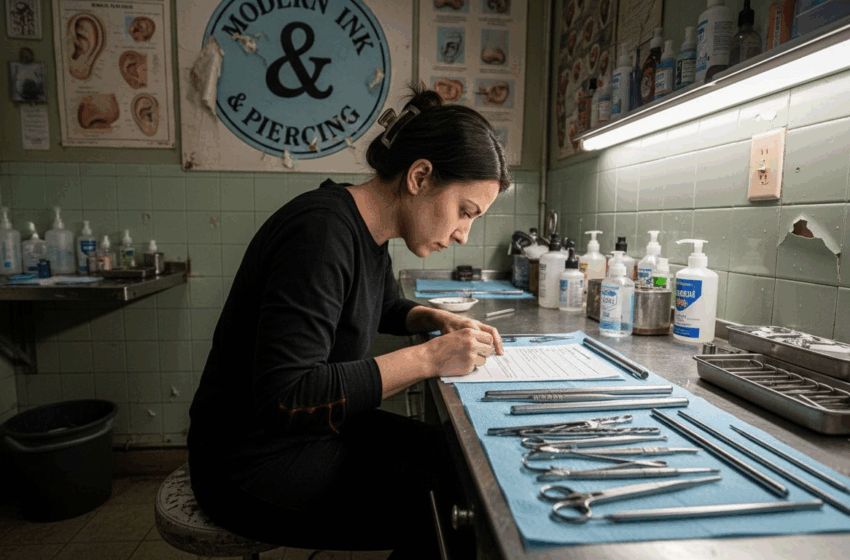
Bold choices in body modification often spark conversations about personal expression and medical history. For young adults seeking a piercing that stands out, the lobotomy piercing offers a striking connection between art and the psychological legacy of the 1930s. Its unique placement on the forehead draws inspiration from controversial surgeries once performed in the United States, turning a difficult past into a statement of individuality. Discover how this piercing blends historical symbolism with modern style and learn about health risks, trends, and essential aftercare for safe results.
Table of Contents
- Defining Lobotomy Piercing And Origins
- Popular Styles And Piercing Variations
- How The Piercing Process Works
- Health Risks, Healing, And Aftercare Tips
- Legal Issues And Professional Standards
Key Takeaways
| Point | Details |
|---|---|
| Lobotomy Piercing Definition | The lobotomy piercing is a unique aesthetic choice inspired by a historical medical procedure, symbolizing personal expression and body modification. |
| Popular Styles | Various styles exist, such as vertical, horizontal, and asymmetrical placements, allowing for individual creativity in design and jewelry selection. |
| Piercing Process | The piercing process is complex and demands professional expertise, ensuring precise placement and minimizing potential complications. |
| Health Risks and Aftercare | Extensive aftercare is crucial due to unique health risks associated with facial tissue, with an emphasis on cleanliness and monitoring healing progress. |
Defining Lobotomy Piercing and Origins
The lobotomy piercing is a unique body modification that draws inspiration from a controversial medical procedure in psychological history. Unlike its surgical namesake, this piercing is a deliberate aesthetic choice that pays homage to the complex narrative of medical interventions in mental health treatment.
Originating from the medical surgical intervention of the 1930s, the lobotomy piercing takes its name and placement from the site of the original neurosurgical procedure. Specifically, it is typically located in the forehead region, mirroring the exact area where Dr. Walter J. Freeman performed his controversial brain surgeries.
Key characteristics of the lobotomy piercing include:
- Positioned centrally on the forehead
- Typically a single, vertical dermal or surface piercing
- Represents a provocative form of body art that references medical history
- Often chosen by individuals interested in avant-garde body modification
The piercing serves as a symbolic representation, transforming a dark medical chapter into a statement of personal expression. It challenges traditional perceptions of body modification by directly referencing a complex historical medical procedure that once promised mental health solutions.
Pro tip: Always consult a professional piercer with extensive experience in advanced dermal piercings to ensure safe and precise placement of a lobotomy piercing.
Popular Styles and Piercing Variations
The lobotomy piercing has evolved into a diverse and intricate form of body modification, with multiple styles reflecting individual creativity and anatomical considerations. Surface piercing techniques have dramatically expanded the potential for unique placements and aesthetic expressions.
Traditional styles of the lobotomy piercing typically involve strategic placement along the forehead, with variations including:
- Horizontal placement between eyebrows
- Vertical positioning in the central forehead region
- Asymmetrical placements near temple or eyebrow areas
- Curved or straight barbell configurations
The jewelry selection plays a crucial role in defining the piercing’s visual impact. Modern jewelry variations range from minimalist designs to elaborate decorative ends featuring gems, spikes, or intricate ball attachments. These design choices allow individuals to personalize their piercing and transform a historical medical reference into a statement of personal artistic expression.
The lobotomy piercing represents more than just a body modification—it’s a provocative dialogue between medical history and contemporary art.
Anatomy significantly influences piercing style, with experienced piercers carefully assessing individual bone structure, skin tension, and tissue depth to determine the most suitable placement and jewelry type. Some individuals opt for a more subtle “third eye” effect, while others choose bold, statement-making configurations.
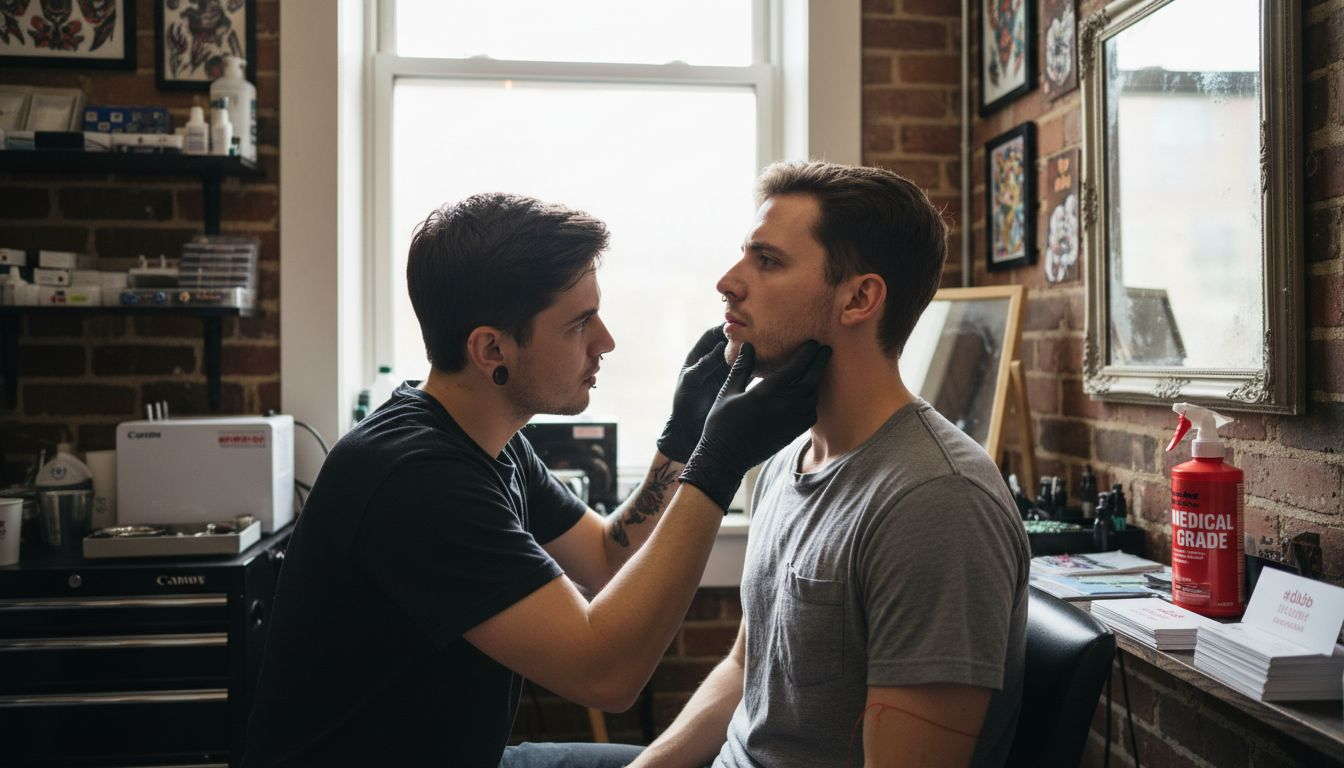
Here’s how different lobotomy piercing styles differ in appearance and technique:
| Style Variation | Placement Location | Jewelry Type | Aesthetic Appeal |
|---|---|---|---|
| Vertical Forehead | Centered above eyebrows | Surface barbell | Striking, anatomical focus |
| Horizontal | Between or above eyebrows | Curved barbell | Bold, geometric line |
| Asymmetrical/Temple | Near eyebrow or temple area | Straight barbell | Edgy, unconventional look |
| “Third Eye” Subtle | Forehead midline | Small dermal anchor | Minimalist, symbolic effect |
Pro tip: Consult a professional piercing artist who specializes in advanced surface piercings to ensure optimal placement and minimize potential complications.
How the Piercing Process Works
The lobotomy piercing requires exceptional precision and specialized technique, distinguishing it from more traditional body modifications. Professional piercing procedures demand meticulous attention to anatomical considerations and strict sterilization protocols.
A comprehensive piercing process involves several critical stages:
- Initial consultation with a specialized piercing professional
- Detailed anatomical assessment of forehead structure
- Precise measurement and marking of insertion point
- Thorough skin sterilization
- Careful needle insertion using specialized surface piercing technique
- Precise jewelry placement
The surface piercing technique is particularly complex, requiring advanced skills to minimize potential complications. Piercers must navigate delicate facial tissue, ensuring minimal trauma while maintaining optimal placement between the eyebrows.
Successful lobotomy piercings demand expertise beyond standard body modification techniques.
Key technical considerations include selecting appropriate jewelry—typically a surface barbell—and understanding potential risks like migration or rejection. The piercer must evaluate skin thickness, tissue elasticity, and individual healing potential to maximize the piercing’s longevity and aesthetic appeal.
Pro tip: Request photographic documentation of your piercer’s previous surface piercing work to verify their specialized expertise before proceeding.
Health Risks, Healing, and Aftercare Tips
The lobotomy piercing presents unique health challenges that require extensive knowledge and meticulous care. Professional piercing aftercare protocols emphasize the critical importance of maintaining a clean and protected healing environment to minimize potential complications.
Potential health risks associated with the lobotomy piercing include:
- Increased risk of infection due to facial tissue sensitivity
- Potential jewelry migration or rejection
- Higher likelihood of scarring
- Allergic reactions to specific metal types
- Prolonged healing time compared to other surface piercings
Medical research indicates that surface piercings like the lobotomy piercing demand more sophisticated aftercare compared to traditional piercings. The delicate facial tissue and constant movement increase vulnerability to complications, making precise care essential.
Successful healing requires consistent attention and professional guidance throughout the entire recovery process.
Critical aftercare steps include using sterile saline solution, avoiding harsh chemicals, minimizing facial touching, and protecting the piercing from potential trauma. Individual healing times vary, but most lobotomy piercings require approximately 6-9 months for complete stabilization.
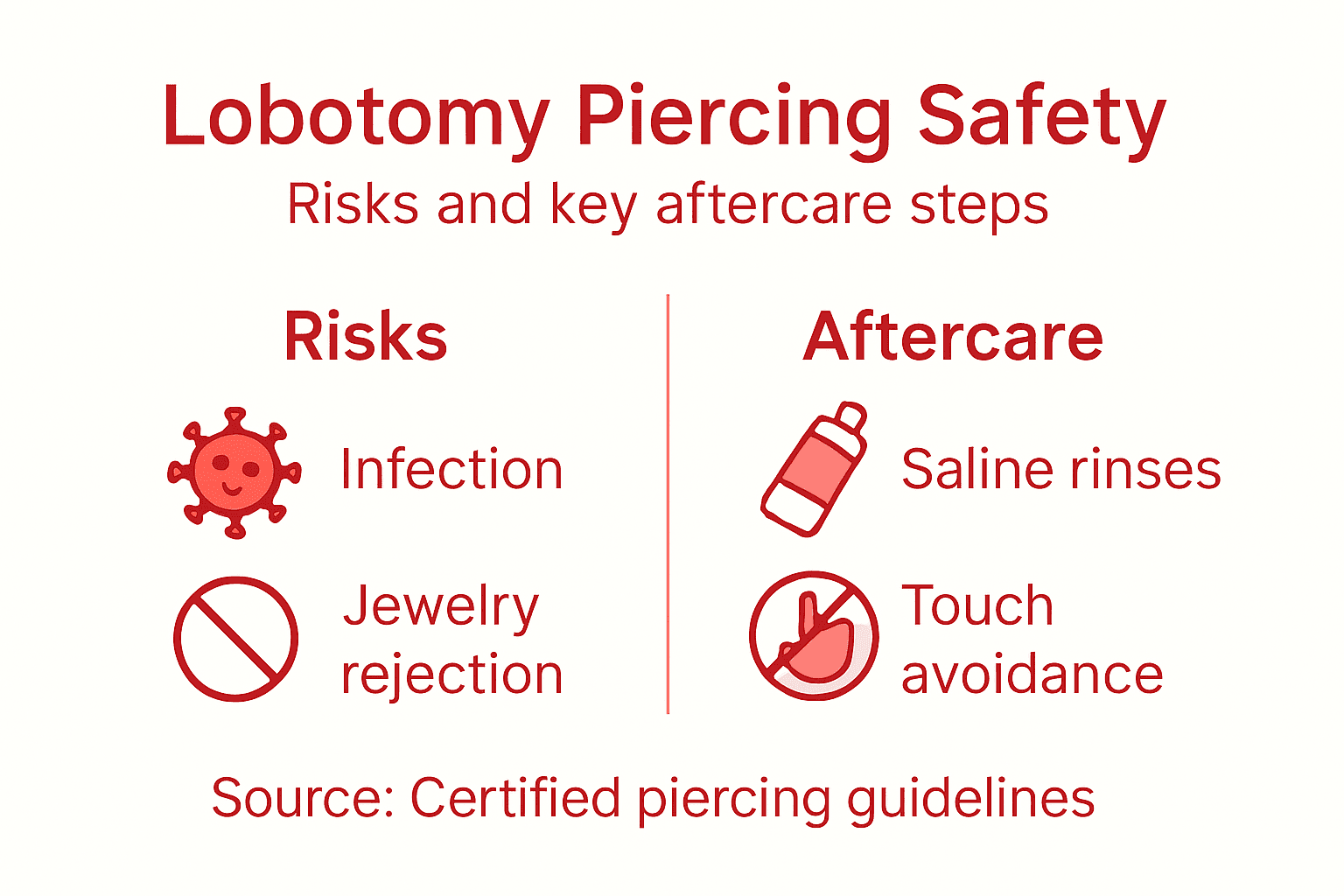
Compare the unique aftercare requirements of lobotomy piercings to more common facial piercings:
| Aspect | Lobotomy Piercing | Nose/Eyebrow Piercing |
|---|---|---|
| Healing Time | 6-9 months | 2-4 months |
| Infection Risk | High due to surface tissue | Moderate, localized |
| Jewelry Migration | Common; needs close watch | Rare with proper care |
| Aftercare Demand | Intensive; frequent checks | Standard saline rinses |
Pro tip: Schedule a follow-up consultation with your professional piercer every 4-6 weeks during the healing process to monitor potential complications and ensure proper progression.
Legal Issues and Professional Standards
The lobotomy piercing exists within a complex legal landscape governed by stringent professional regulations designed to protect client safety. Body piercing regulations vary significantly across different states and municipalities, creating a nuanced legal environment for practitioners.
Key legal considerations for professional piercers include:
- Mandatory bloodborne pathogen certification
- State-specific licensing requirements
- Documented client consent procedures
- Adherence to sterilization protocols
- Compliance with local health department regulations
- Maintenance of professional liability insurance
Professional piercing standards emphasize comprehensive practitioner training and ethical conduct. Surface piercings like the lobotomy piercing demand specialized knowledge, with professional organizations establishing rigorous guidelines to minimize potential health risks and legal complications.
Professional standards are not just recommendations—they are critical safeguards protecting both practitioners and clients.
The legal landscape for body modification continues to evolve, with increasing scrutiny on practitioner qualifications and client safety. Professional piercers performing specialized procedures must navigate complex regulatory environments, ensuring full compliance with local, state, and national health standards.
Pro tip: Always verify a piercer’s current certifications and request documentation of their professional training before proceeding with any specialized surface piercing.
Discover the Art and Safety Behind Unique Piercings Like the Lobotomy Piercing
Navigating the complex world of body modifications like the lobotomy piercing means understanding the delicate balance between personal expression and health risks. This article highlights the intricate piercing process, potential complications, and the importance of expert care for advanced surface piercings. If you are fascinated by innovative fashion statements or seeking trustworthy guidance on lifestyle topics, TechMoths offers extensive educational resources that empower you to make informed decisions.
Explore more insightful articles on lifestyle, health, and personal development at TechMoths. Stay ahead of trends, learn best practices for safe body modifications, and expand your knowledge with guides and tips found throughout our platform. Start your journey now to combine creativity with safety by visiting TechMoths homepage and discover carefully curated content on piercing safety, fashion, and beyond.
Frequently Asked Questions
What is a lobotomy piercing?
A lobotomy piercing is a unique body modification inspired by the historical surgical procedure of lobotomy. It is typically located on the forehead and consists of a single, vertical dermal or surface piercing that represents a provocative form of body art referencing medical history.
How is a lobotomy piercing performed?
The lobotomy piercing requires precision and specialized techniques. The process includes an initial consultation, anatomical assessment, skin sterilization, and careful needle insertion using a surface piercing technique, followed by precise jewelry placement.
What are the risks and aftercare requirements for a lobotomy piercing?
Potential risks include infection, jewelry migration, or rejection. Aftercare is critical and includes using sterile saline solution, minimizing touching the area, and protecting the piercing from trauma. Generally, lobotomy piercings take about 6-9 months to heal completely.
How does a lobotomy piercing compare to other facial piercings in terms of healing time and care?
Lobotomy piercings typically require a longer healing time of 6-9 months compared to nose or eyebrow piercings, which generally heal in 2-4 months. Additionally, lobotomy piercings demand more intensive aftercare due to the sensitivity of facial tissue.
