

Defining Digital Transformation: Keys to Business Impact

Many business leaders find that simply adding new digital tools does not guarantee progress. Digital transformation means reshaping every part of how organizations operate, from decision making to customer engagement. American companies aiming for resilient growth need strategies that connect technology with culture, leadership, and workforce skills. This article clarifies what true digital transformation involves and offers fresh guidance for driving real organizational change and efficiency.
Table of Contents
- What Digital Transformation Really Means
- Types of Digital Transformation Initiatives
- Key Features Driving Successful Change
- Major Misconceptions and Myths Explained
- Risks, Costs, and Implementation Challenges
- Real-World Business Impact and Use Cases
Key Takeaways
| Point | Details |
|---|---|
| Holistic Transformation | Digital transformation requires a comprehensive approach that integrates technology, culture, and processes to drive continuous improvement. |
| Continuous Journey | Organizations should treat digital transformation as an ongoing strategy rather than a one-time project, necessitating persistent investment and adaptation. |
| Cross-Functional Collaboration | Successful initiatives thrive on collaboration across departments, promoting agile leadership and cultural readiness for change. |
| Strategic Alignment | Digital investments must align with core business objectives to maximize impact and drive sustainable growth. |
What Digital Transformation Really Means
Digital transformation represents far more than simply implementing new technologies. It’s a comprehensive strategic approach that fundamentally reimagines how organizations operate, compete, and deliver value in an increasingly digital world. Integrating digital technologies across all business functions requires a holistic transformation that transcends technical implementation.
At its core, digital transformation involves several critical dimensions that go beyond mere technological adoption:
- Reimagining business processes and operational models
- Developing adaptive organizational cultures
- Empowering workforce digital capabilities
- Creating data-driven decision-making frameworks
- Enhancing customer experience through digital channels
Successful digital transformation isn’t a one-time project but a continuous journey of strategic evolution. Organizations must recognize that technological implementation is just the beginning of a more profound organizational change. Strategic digital initiatives demand comprehensive approaches that integrate leadership, human capital, and technological innovation.
The most effective digital transformations occur when companies view technology not as a standalone solution, but as an enabler of broader strategic objectives. This means aligning digital investments with core business goals, cultivating a culture of continuous learning, and maintaining flexibility to adapt to emerging technological landscapes.
Pro tip: Approach digital transformation as an ongoing organizational strategy, not a one-time technology implementation, by establishing cross-functional teams dedicated to continuous digital innovation and learning.
Types of Digital Transformation Initiatives
Digital transformation encompasses a wide range of strategic initiatives that fundamentally reshape how organizations leverage technology to drive business value. Digital transformation initiatives are not one-size-fits-all but instead represent tailored approaches addressing unique organizational challenges and opportunities.
Key types of digital transformation initiatives include:
- Infrastructure Modernization
- Cloud migration and legacy system upgrades
- Network and cybersecurity enhancements
- Scalable digital architecture development
- Operational Process Transformation
- Business process automation
- Data-driven workflow optimization
- Intelligent analytics integration
- Customer Experience Reinvention
- Personalized digital service platforms
- Omnichannel engagement strategies
- Real-time customer interaction technologies
Successful digital transformation requires comprehensive strategic digital approaches that address technological, human, and organizational dimensions. Technological capabilities must be balanced with cultural adaptability and continuous learning to drive meaningful organizational change.
Organizations must view these initiatives as interconnected strategies rather than isolated technological implementations. This holistic approach demands cross-functional collaboration, agile leadership, and a commitment to ongoing digital innovation that aligns technological investments with broader business objectives.

Pro tip: Create a dedicated digital transformation roadmap that prioritizes initiatives based on strategic impact, organizational readiness, and potential return on investment.
Key Features Driving Successful Change
Digital transformation is not simply about implementing new technologies, but about creating a comprehensive ecosystem of innovation and strategic adaptation. Effective digital transformation strategies require a multifaceted approach that goes beyond technological implementation.
Key features that drive successful digital change include:
- Cultural and Organizational Readiness
- Embracing a digital-first mindset
- Promoting continuous learning
- Breaking down organizational silos
- Technological Capabilities
- Advanced data analytics integration
- Cloud and infrastructure modernization
- Robust cybersecurity frameworks
- Strategic Leadership
- Agile decision-making processes
- Cross-functional collaboration
- Innovation-driven leadership approach
Digital transformation drivers demonstrate that successful change is fundamentally about creating an adaptive organizational environment. This means developing capabilities that allow businesses to rapidly respond to technological shifts, market demands, and emerging opportunities.
The most successful organizations understand that digital transformation is an ongoing journey, not a destination. It requires continuous investment in human capital, technological infrastructure, and strategic thinking that aligns digital capabilities with broader business objectives.
Pro tip: Conduct regular digital maturity assessments to identify gaps and prioritize transformation initiatives that directly align with your organization’s strategic goals.
Major Misconceptions and Myths Explained
Digital transformation has become a buzzword that often leads to significant misunderstandings about its true nature and implementation. Biggest digital transformation misconceptions reveal that many organizations approach this critical strategic process with fundamentally flawed assumptions.
Common myths about digital transformation include:
- Myth: Digital Transformation is a One-Time Project
- Reality: It’s a continuous, evolving journey
- Requires ongoing strategic investment
- Demands constant adaptation and learning
- Myth: Only Large Businesses Need Digital Transformation
- Reality: Relevant for businesses of all sizes
- Small organizations can leverage digital strategies
- Competitive advantage comes from strategic implementation
- Myth: Digital Transformation is Purely Technological
- Reality: Involves cultural and organizational change
- Requires human capital development
- Technology is an enabler, not the entire solution
Digital transformation myths demonstrate that successful organizational change goes far beyond simply implementing new technologies. It’s a comprehensive approach that integrates people, processes, and technological capabilities to create sustainable business value.
The most dangerous misconception is treating digital transformation as a destination rather than an ongoing journey of continuous improvement and adaptation. Organizations must embrace a dynamic mindset that views technological and cultural evolution as a persistent strategic imperative.
Here’s a comparison of digital transformation myths versus their realities:
| Common Myth | Reality | Implication |
|---|---|---|
| A one-time project | Ongoing evolution | Requires strategic reinvestment |
| Only for large companies | Valuable for any size | Levels the competitive field |
| Purely technological | Integrates culture, talent | Demands holistic change management |
These distinctions help organizations avoid costly misconceptions.
Pro tip: Develop a flexible digital transformation framework that allows for iterative improvements and can quickly adapt to emerging technological and market changes.
Risks, Costs, and Implementation Challenges
Digital transformation is not a straightforward journey, but a complex strategic initiative fraught with multifaceted risks and potential pitfalls. Digital transformation challenges reveal that organizations must navigate a sophisticated landscape of technological, cultural, and operational obstacles.
Key implementation risks include:
- Strategic and Leadership Challenges
- Lack of clear digital vision
- Inadequate executive commitment
- Misalignment between technology and business goals
- Organizational and Cultural Barriers
- Resistance to change
- Limited digital skills
- Siloed departmental structures
- Technical and Financial Constraints
- Legacy system complexity
- Budget limitations
- Integration and interoperability issues
Government digital transformation challenges demonstrate that successful implementation requires comprehensive planning, stakeholder engagement, and a nuanced understanding of organizational dynamics. The most significant risks emerge not from technological limitations, but from human and structural barriers to change.
Successful digital transformation demands a holistic approach that balances technological investment with cultural adaptation. Organizations must develop robust change management strategies, invest in continuous learning, and create flexible frameworks that can evolve with emerging technological and market demands.
Pro tip: Conduct a comprehensive digital readiness assessment before launching transformation initiatives to identify potential risks, skill gaps, and cultural barriers specific to your organization.
Real-World Business Impact and Use Cases
Digital transformation transcends theoretical concepts, delivering measurable and profound impacts across diverse organizational contexts. Business transformation outcomes demonstrate that strategic digital initiatives can fundamentally reshape organizational performance, competitiveness, and operational effectiveness.
Real-world digital transformation impacts include:
- Operational Performance Enhancement
- Streamlined business processes
- Reduced operational costs
- Increased organizational agility
- Customer Experience Revolution
- Personalized service delivery
- Faster response times
- Omnichannel engagement strategies
- Innovative Service Provision
- Data-driven decision making
- Advanced analytics integration
- Predictive capability development
Digital transformation reshaping highlights that successful implementations create more than technological upgrades – they generate comprehensive organizational metamorphosis. These transformations enable businesses to respond rapidly to market changes, leverage emerging technologies, and create sustainable competitive advantages.
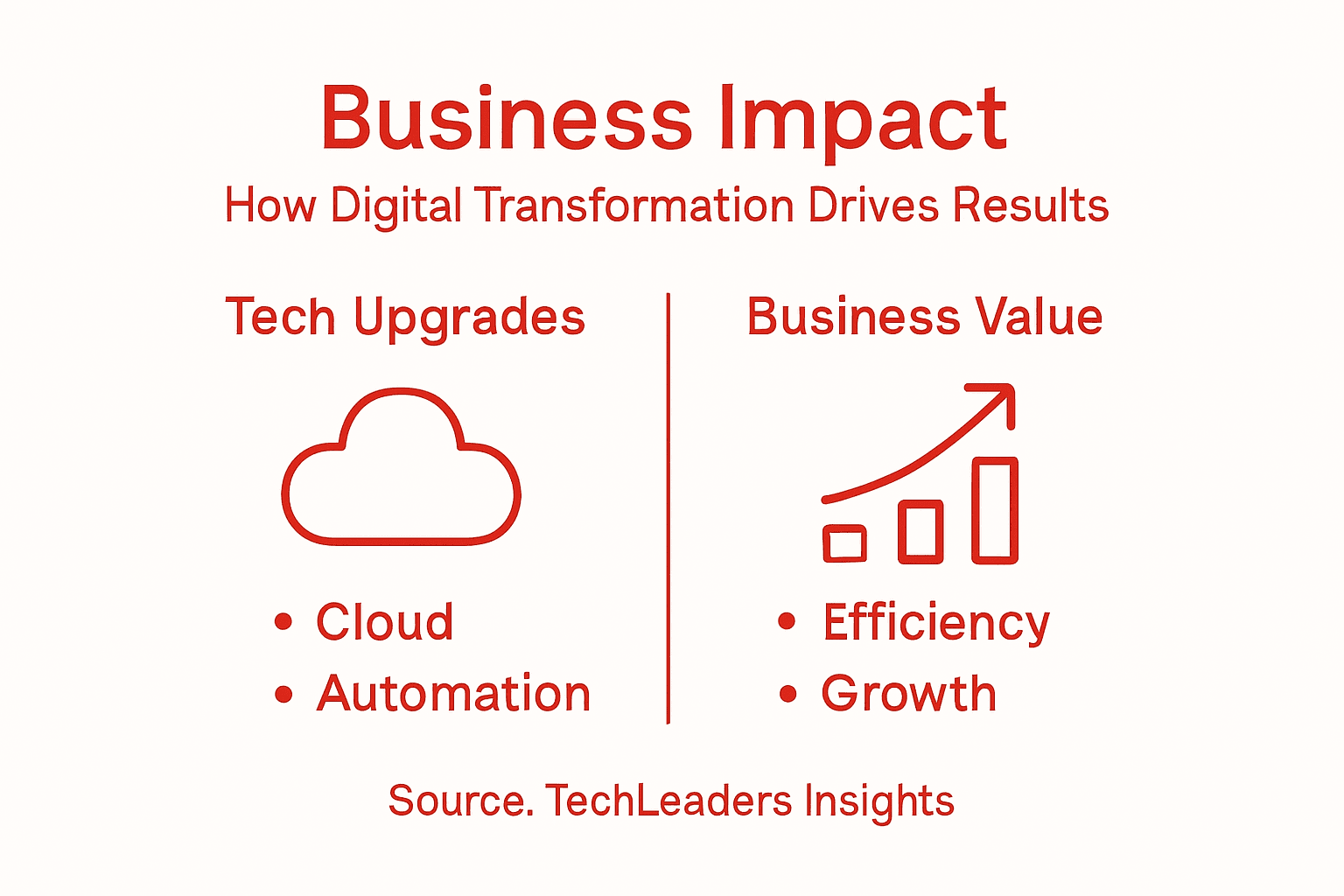
Successful digital transformations are characterized by their holistic approach, integrating technological solutions with strategic vision, cultural adaptation, and continuous learning. Organizations that view digital transformation as an ongoing journey rather than a destination are most likely to realize substantial and lasting business benefits.
Digital transformation impacts organizations in several distinct ways:
| Impact Area | Typical Outcome | Example Benefit |
|---|---|---|
| Operations | Increased agility | Faster adaptation to trends |
| Customer Experience | Personalized interactions | Higher customer satisfaction |
| Innovation | Data-driven decision making | Improved service prediction |
Considering these impacts can guide strategic planning and investment.
Pro tip: Develop a cross-functional digital transformation team that combines technological expertise with strategic business understanding to drive meaningful organizational change.
Unlock the True Power of Digital Transformation for Your Business Success
Digital transformation is more than just technology adoption. It is about overcoming challenges like organizational resistance, aligning leadership vision, and fostering a culture that embraces continuous innovation. If you are looking to navigate these complex shifts and drive real business impact, understanding the strategic journey is essential. The article highlights critical points such as developing adaptive cultures, integrating data-driven decision making, and avoiding common myths that can derail your transformation efforts.
Explore a wealth of insights and practical knowledge on how digital transformation reshapes business performance at TechMoths. Equip yourself with educational guides and strategic advice that address operational changes, leadership challenges, and innovation strategies. Visit TechMoths today to start your journey towards mastering digital transformation and leverage a rich collection of content designed to empower professionals like you. Don’t wait to transform your approach—gain the competitive edge now by accessing expert articles and actionable content at TechMoths.
Frequently Asked Questions
What is digital transformation?
Digital transformation is a strategic approach that reimagines how organizations operate and deliver value by integrating digital technologies across all business functions. It encompasses cultural change, operational improvements, and enhanced customer experiences.
Why is digital transformation important for businesses?
Digital transformation is essential because it helps organizations adapt to the rapidly evolving digital landscape, improve operational efficiency, enhance customer satisfaction, and maintain competitive advantage in their industries.
What are the main types of digital transformation initiatives?
The main types of digital transformation initiatives include infrastructure modernization, operational process transformation, and customer experience reinvention. These initiatives address unique organizational challenges and aim to drive business value through technology and process improvements.
How can organizations ensure successful digital transformation?
Organizations can ensure successful digital transformation by fostering a digital-first culture, establishing strategic leadership, cultivating continuous learning, and aligning technology investments with business goals. A comprehensive roadmap that prioritizes initiatives based on strategic impact is also crucial.
