

Malayalam Alphabet: Letters, Vowels & Consonants Guide
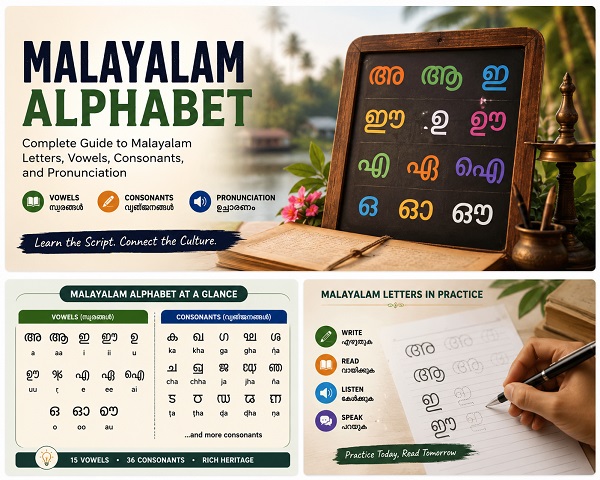
The Malayalam alphabet is one of the most distinctive writing systems in India. Known for its elegant curves and unique character formations, the Malayalam script is used to write Malayalam, the official language of Kerala and one of the 22 scheduled languages of India.
For beginners, learning the Malayalam alphabet can seem challenging because the script looks very different from the Latin alphabet used in English. However, once you understand the structure of Malayalam vowels, consonants, and pronunciation rules, the language becomes much easier to read and write.
In this comprehensive guide, you’ll learn everything you need to know about the Malayalam alphabet, including its history, letter system, pronunciation patterns, and practical tips for mastering the script.
What Is the Malayalam Alphabet?
The Malayalam alphabet, known locally as Malayalam Aksharamala (അക്ഷരമാല), is the writing system used for the Malayalam language. It belongs to the Brahmic family of scripts and shares historical roots with several other Indian writing systems.
Unlike English, where letters are written separately, Malayalam uses a syllabic writing system. This means that many characters represent combinations of consonants and vowels rather than individual sounds alone.
The script is written from left to right and contains a rich set of symbols that allow speakers to represent a wide range of sounds accurately.
Today, Malayalam is spoken by more than 35 million people worldwide, primarily in Kerala, Lakshadweep, and Malayali communities across the globe.
A Brief History of the Malayalam Script
The Malayalam script evolved from the ancient Grantha script, which was historically used in southern India for writing Sanskrit texts.
Over several centuries, the writing system developed into a distinct script capable of representing the unique sounds of the Malayalam language.
Important milestones in the development of the Malayalam alphabet include:
- Origins in the Brahmi script
- Evolution through the Grantha writing tradition
- Adaptation for regional linguistic needs
- Standardization during the printing era
- Digital encoding through Unicode standards
Modern Malayalam typography has become widely accessible through computers, smartphones, and online learning platforms, making it easier than ever to study the language.
How Many Letters Are in the Malayalam Alphabet?
The exact number of Malayalam letters varies depending on how scholars classify the script.
Generally, the Malayalam writing system consists of:
- 15 vowels (സ്വരങ്ങൾ)
- 36 consonants (വ്യഞ്ജനങ്ങൾ)
- Additional consonant forms
- Chillu letters
- Conjunct characters
Many educational resources describe Malayalam as having approximately 51 to 56 primary characters, though advanced writing includes numerous compound combinations.
Because Malayalam is an abugida, consonants inherently contain a vowel sound unless modified by vowel markers.
Malayalam Vowels (Svarangal)
Vowels form the foundation of pronunciation in Malayalam. They can appear independently or combine with consonants to create syllables.
Common Malayalam Vowels
| Malayalam | Transliteration |
| അ | a |
| ആ | aa |
| ഇ | i |
| ഈ | ii |
| ഉ | u |
| ഊ | uu |
| ഋ | r̥ |
| എ | e |
| ഏ | ee |
| ഐ | ai |
| ഒ | o |
| ഓ | oo |
| ഔ | au |
These vowels are essential for forming words and understanding spoken Malayalam.
Examples
- അമ്മ (Amma) – Mother
- ആന (Aana) – Elephant
- ഇല (Ila) – Leaf
- ഉപ്പ് (Uppu) – Salt
Practicing vowel pronunciation is often the first step for new learners.
Malayalam Consonants (Vyanjanangal)
Consonants represent the majority of symbols in the Malayalam script.
Some commonly used Malayalam consonants include:
| Malayalam | Transliteration |
| ക | ka |
| ഖ | kha |
| ഗ | ga |
| ഘ | gha |
| ച | cha |
| ജ | ja |
| ട | ta |
| ഡ | da |
| ത | tha |
| ദ | dha |
| പ | pa |
| ബ | ba |
| മ | ma |
| യ | ya |
| ര | ra |
| ല | la |
| വ | va |
| ശ | sha |
| സ | sa |
| ഹ | ha |
These consonants combine with vowels to form thousands of possible syllables.
Example:
- ക + ആ = കാ (kaa)
- പ + ഇ = പി (pi)
- മ + ഉ = മു (mu)
Understanding Vowel Signs
One feature that makes Malayalam unique is the use of vowel signs.
When a vowel combines with a consonant, the vowel often changes form and attaches to the consonant.
Examples:
- ക (ka)
- കാ (kaa)
- കി (ki)
- കീ (kii)
- കു (ku)
- കൂ (kuu)
- കെ (ke)
- കൈ (kai)
- കോ (ko)
Learning these combinations helps students read real Malayalam text more quickly.
Special Characters in Malayalam
Malayalam includes several unique characters not commonly found in many writing systems.
Chillu Letters
Chillu letters are special consonant forms that represent pure consonant sounds without an inherent vowel.
Examples include:
- ൻ
- ർ
- ൽ
- ൾ
- ൺ
These characters play an important role in proper spelling and pronunciation.
Conjunct Consonants
Malayalam also uses conjunct forms created when multiple consonants appear together.
Examples:
- ക്ഷ
- ന്ത
- മ്പ
- ഗ്ന
Mastering these forms is an important step toward reading advanced Malayalam texts.
Malayalam Pronunciation Guide
Many learners find Malayalam pronunciation easier than expected because the script is generally phonetic.
Key Pronunciation Tips
1. Pronounce Words As Written
Unlike English, Malayalam spelling often closely matches pronunciation.
2. Pay Attention to Long and Short Vowels
Changing vowel length can alter a word’s meaning.
3. Practice Retroflex Sounds
Sounds such as ട, ഡ, and ണ require the tongue to curl slightly backward.
4. Listen to Native Speakers
Exposure to authentic speech significantly improves pronunciation accuracy.
Common Malayalam Words for Beginners
Learning simple vocabulary helps reinforce alphabet knowledge.
| Malayalam | Meaning |
| നമസ്കാരം | Hello |
| അമ്മ | Mother |
| അച്ഛൻ | Father |
| വെള്ളം | Water |
| വീട് | House |
| പുസ്തകം | Book |
| സ്കൂൾ | School |
| സുഹൃത്ത് | Friend |
| ഭക്ഷണം | Food |
| സമയം | Time |
Practicing these words helps learners connect letters with real-world usage.
Challenges Beginners Face
Many students encounter similar obstacles when learning Malayalam.
Similar-Looking Characters
Some letters appear visually similar and require extra practice to distinguish.
Consonant-Vowel Combinations
The large number of possible combinations can initially feel overwhelming.
Conjunct Characters
Advanced texts often contain compound forms that beginners have not yet learned.
Reading Speed
Early learners typically read slowly until letter recognition becomes automatic.
Consistent daily practice helps overcome these challenges.
Best Ways to Learn the Malayalam Alphabet
Practice Writing Every Day
Handwriting helps reinforce memory and improves recognition skills.
Use Flashcards
Flashcards are effective for memorizing vowels, consonants, and common combinations.
Read Children’s Books
Simple Malayalam stories provide excellent reading practice.
Watch Malayalam Content
Movies, television programs, and educational videos help strengthen listening skills.
Learn Common Words First
Focusing on frequently used vocabulary creates faster progress and greater confidence.
Why Learning Malayalam Is Valuable
Learning Malayalam offers several benefits beyond language acquisition.
Cultural Understanding
The language provides direct access to Kerala’s literature, traditions, and history.
Travel Opportunities
Visitors to Kerala can communicate more effectively with local communities.
Career Advantages
Multilingual professionals often have broader opportunities in education, tourism, media, and business.
Family Connections
Many people learn Malayalam to communicate with relatives and preserve cultural heritage.
Final Thoughts
The Malayalam alphabet is one of the most fascinating writing systems in the world. While its curved letters and extensive character combinations may seem intimidating at first, understanding the structure of vowels, consonants, and pronunciation patterns makes the learning process much easier.
Whether your goal is to communicate with native speakers, explore Kerala’s rich cultural heritage, improve travel experiences, or simply learn a new language, mastering the Malayalam alphabet is the first and most important step.
With consistent practice, patience, and exposure to authentic Malayalam content, you’ll gradually develop the skills needed to read, write, and understand this beautiful language with confidence.
Frequently Asked Questions
Is Malayalam difficult to learn?
Malayalam can be challenging initially because of its unique script, but regular practice makes learning manageable for most students.
How many letters are in the Malayalam alphabet?
Most educational resources describe Malayalam as having approximately 51–56 core characters, including vowels and consonants.
Is Malayalam older than Hindi?
Both languages have long histories, though they evolved from different linguistic traditions and historical developments.
Can English speakers learn Malayalam?
Yes. Many English speakers successfully learn Malayalam through structured lessons, reading practice, and regular exposure to native speech.
How long does it take to learn the Malayalam alphabet?
Most learners can recognize basic Malayalam letters within a few weeks of consistent study.
