Modern education: key approaches, trends, and realities

Most people assume modern education is simply about putting tablets in classrooms or switching textbooks for screens. That assumption misses the bigger picture. Modern education goes far beyond just using new tech in classrooms. It involves a fundamental rethinking of how students learn, what skills they need, and how teachers can respond to a rapidly changing world. This article walks through the core principles, global realities, classroom methods, ongoing debates, and future skills that define education today. Whether you are a student, parent, educator, or lifelong learner, understanding these shifts can help you make better decisions about learning.
Table of Contents
- Core principles of modern education
- Global realities: Outcomes, gaps, and challenges today
- Teaching methods reshaping learning
- Debates and dilemmas: Is modern education working?
- Future skills and lifelong learning: Preparing for what’s next
- Why ‘modern’ education’s success rests on mindset, not methods
- Find your path with innovative education resources
- Frequently asked questions
Key Takeaways
| Point | Details |
|---|---|
| Multiple teaching methods | Modern education blends project-based, collaborative, and tech-driven approaches for real-world learning. |
| Progress and persistent gaps | Global education shows rising literacy and completion, but big challenges remain in equity and access. |
| Debates about technology | Expert opinions differ—tech helps but isn’t a magic bullet, and effective teaching matters most. |
| Future-ready focus | Modern classrooms prepare learners with skills for jobs and problems that don’t even exist yet. |
Core principles of modern education
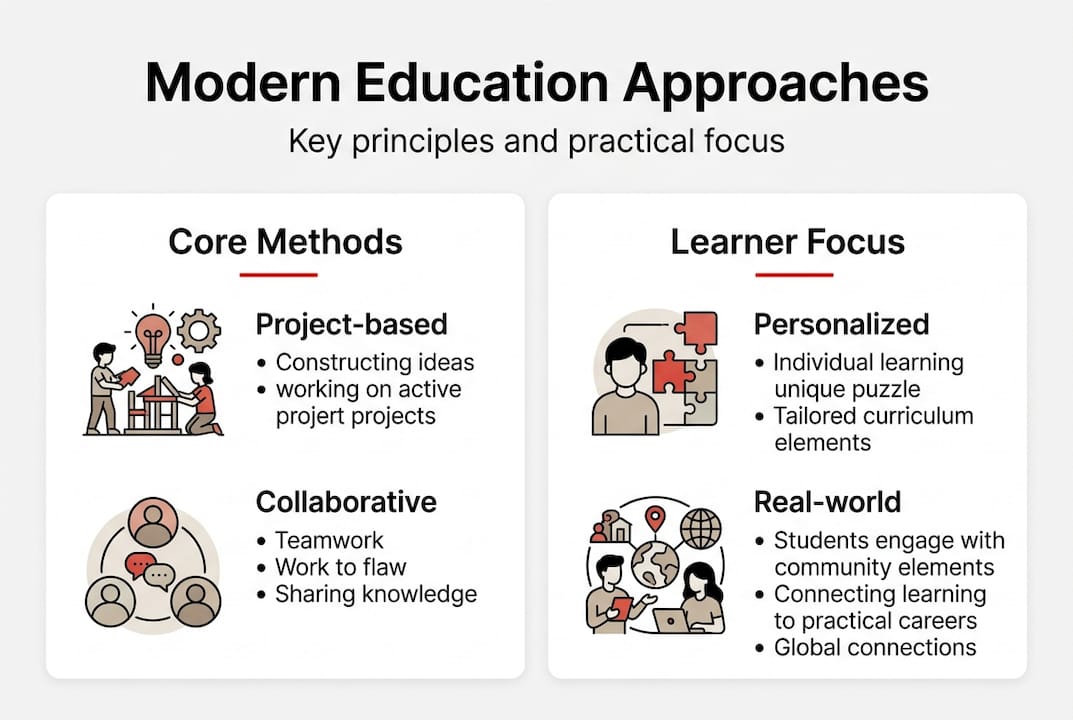
Modern education is built on a simple but powerful idea: the learner comes first. Unlike older models that placed the teacher at the center of all knowledge transfer, today’s approaches treat students as active participants in their own learning. This means adapting content to individual needs, building real-world skills, and encouraging curiosity over compliance.
Understanding technology’s role in schools is one piece of the puzzle, but the broader framework matters more. Key methodologies shaping modern classrooms include:
- Project-based learning: Students solve real problems over extended periods
- Blended and hybrid models: Combining online and in-person instruction
- Personalized learning: Tailoring pace and content to each student
- Collaborative learning: Group work that mirrors real workplace dynamics
- Experiential learning: Learning through doing, not just listening
- Flipped classrooms: Students review content at home, practice in class
- Formative and continuous assessment: Ongoing feedback instead of one final exam
- STEAM integration: Connecting science, technology, engineering, arts, and math
Here is a quick comparison of classical and modern approaches:
| Feature | Classical approach | Modern approach |
|---|---|---|
| Focus | Teacher-led instruction | Learner-centered engagement |
| Goal | Knowledge retention | Skill development and adaptability |
| Assessment | Exams and grades | Continuous feedback and portfolios |
| Content | Fixed curriculum | Flexible, real-world relevant |
| Interaction | Passive listening | Active participation |
Pro Tip: True modern education is not about gadgets. It is about meaningful engagement, interaction, and real-world relevance. A well-designed discussion can outperform any app.
Global realities: Outcomes, gaps, and challenges today
Having set the principles, it is critical to see how these ideas fare in the real world and where global education stands right now. The data tells a sobering story alongside the progress.
According to 2026 global benchmarks, the numbers look like this:
| Indicator | Current figure |
|---|---|
| Out-of-school population | 273 million (2024) |
| Primary completion rate | 88% |
| Lower secondary completion | 78% |
| Upper secondary completion | 61% |
| Youth literacy rate | 93% |
| Adult literacy rate | 88% |
| Chronic absenteeism | ~18% |
| Teacher shortage rate | 61% |
| PISA math score decline (2022) | 15 points |
The out-of-school population stands at 273 million globally in 2024, a 3% rise since 2015. That number should stop you in your tracks. Progress in completion rates has not kept pace with population growth or learning quality.
Understanding education access challenges helps explain why these gaps persist across regions. The critical barriers include:
- Digital divide: Millions lack reliable internet or devices at home
- Regional disparities: Rural and low-income areas face the steepest gaps
- Teacher shortages: Over 60% of countries report critical staffing deficits
- Economic pressures: Poverty forces many students to leave school early
Building digital literacy for students is increasingly urgent, but access remains unequal. Statistics capture scale, not individual stories. A child in a well-funded urban school and one in a rural area with no internet both appear in the same global data, yet their realities are worlds apart. Numbers frame the problem. They do not solve it.
Teaching methods reshaping learning
With those numbers in mind, let us zoom in on what actually happens in modern classrooms. Key methodologies such as project-based, blended, personalized, collaborative, experiential, and flipped classroom approaches underpin modern education. Here is how they look in practice:
- Project-based workflow: A teacher assigns a community problem. Students research, collaborate, present findings, and receive feedback over several weeks.
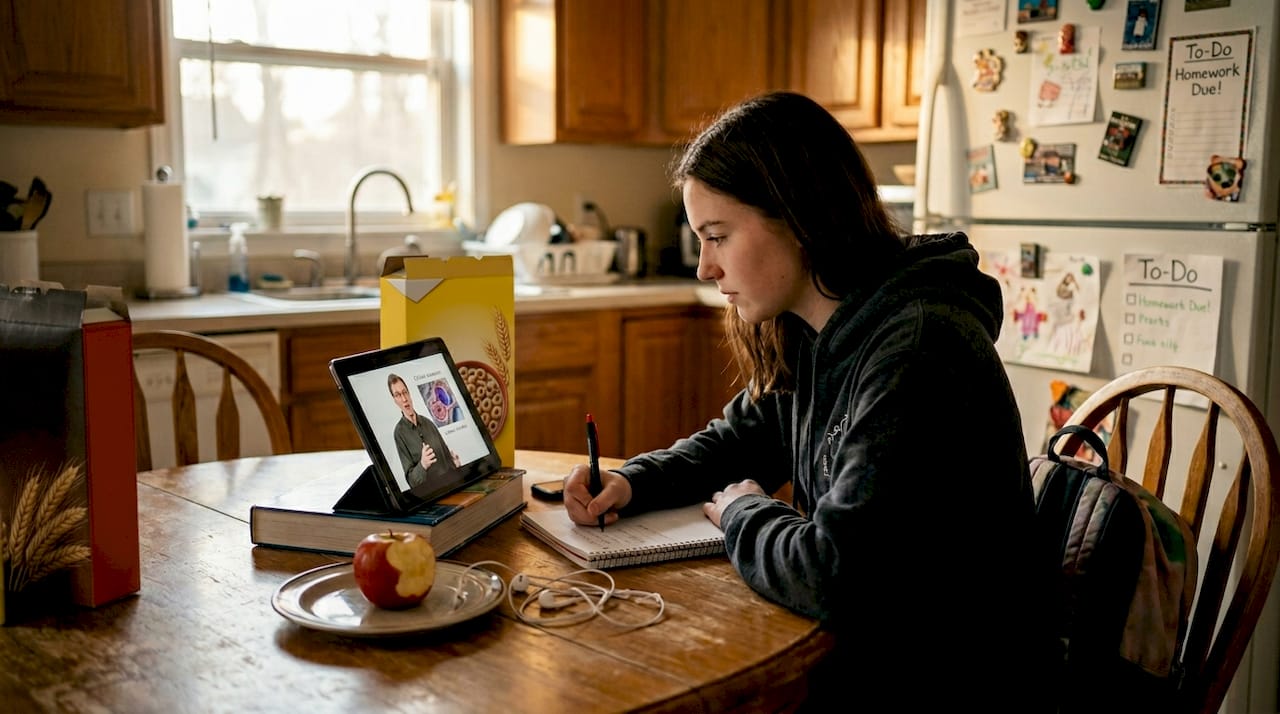
- Flipped classroom routine: Students watch a short video lecture at home. Class time is used for questions, group problem-solving, and hands-on practice.
- Personalized learning in action: Software tracks each student’s pace. The teacher uses that data to offer targeted support where gaps appear.
- Collaborative group work: Small teams tackle a design challenge. Each member takes a role, mirroring how workplaces actually function.
- Formative assessment cycle: Instead of one big test, teachers use quick quizzes, exit tickets, and peer reviews to adjust instruction weekly.
Exploring personalized learning strategies shows how these approaches can be adapted for different learners. Meanwhile, IoT tools in classrooms are expanding what is possible in connected learning environments.
“High-quality teaching focuses on cognitive engagement, clear content, meaningful interaction, and timely feedback. Everything else supports those four pillars.”
Pro Tip: Do not let the tool overshadow the learning. Focus on student thinking and engagement first. The best lesson plan is the one that makes students genuinely curious.
Debates and dilemmas: Is modern education working?
But there is real debate over these innovations, so what do the critics and supporters say about the results? The honest answer is: it depends on what you measure and who you ask.
Research on edtech outcomes shows effect sizes of only +0.16 to +0.29, well below the +0.40 threshold considered meaningful for student improvement. Critics argue that screens reduce reading comprehension and that outcome hierarchies remain largely unchanged despite billions spent on technology.
Key concerns worth taking seriously include:
- Screen time and memory: Heavy device use may reduce deep reading and retention
- Teacher shortages: No method works without skilled, supported educators
- Privacy issues: Student data collected by edtech platforms raises serious concerns
- Equity gaps: New tools often reach well-funded schools first, widening existing divides
The classical education tradition argues that schools should prioritize virtue, wisdom, and deep thinking over vocational skills. Supporters of education trends and AI counter that the world has changed and schools must respond. Both sides have valid points.
“Schools should offer students ‘free time’ from societal pressures, a space for genuine education rather than just workforce preparation.”
The impact of edtech is real but uneven. What research consistently shows is that teacher quality, strong relationships, and a culture of feedback matter more than any specific platform or device. That finding cuts across both classical and modern camps.
Future skills and lifelong learning: Preparing for what’s next
Despite the heated debate, one thing is clear: preparing for the future means learning new kinds of skills. Modern education prioritizes equity, inclusion, and lifelong skills, especially since 65% of future jobs do not yet exist. That statistic alone reframes the entire conversation about what schools should be doing.
Here are the essential lifelong learning skills students need to build now:
- Adaptability: The ability to shift approaches when circumstances change
- Digital literacy: Understanding how to use, evaluate, and create with technology
- Collaboration: Working effectively with people across different backgrounds and roles
- Critical thinking: Questioning assumptions and evaluating evidence carefully
- Self-direction: Taking ownership of your own learning without waiting to be told
Improving soft skills is increasingly recognized as essential alongside technical knowledge. The connection between self-improvement and tech also shows how personal growth and digital tools can reinforce each other when used intentionally.
Modern education supports these skills when it is done well. Project-based learning builds collaboration and critical thinking. Personalized learning builds self-direction. The challenge is consistency. Not every school or system delivers these approaches with the same quality or depth.
Pro Tip: Build flexibility and curiosity into your learning habits now. Today’s students need to learn how to keep learning, not just how to pass the next test.
Why ‘modern’ education’s success rests on mindset, not methods
Here is something most education conversations miss: the real difference between schools that thrive and those that stagnate is not the technology they use or the methodology they adopt. It is the mindset of the people inside them.
Schools that genuinely improve student outcomes share a common trait. They treat learning as an ongoing practice, not a fixed destination. Teachers reflect on what worked. Leaders respond to feedback. Students are encouraged to ask hard questions. That culture of continuous improvement is harder to buy than any software license, but it matters far more.
Education startups and innovation often focus on tools and platforms, and some of those tools are genuinely useful. But evidence consistently shows that teacher-student interaction, timely feedback, and school culture outperform technological quick fixes every time.
Most educators and families overestimate what a new device or program can do and underestimate the power of reflective practice and strong relationships. School transformation is less about what you buy and more about how you teach, how you listen, and how you respond when something is not working. That shift in thinking is the real foundation of modern education.
Find your path with innovative education resources
Inspired to learn more or take the next step in your education journey? Explore trusted resources below.
Understanding modern education is just the beginning. Whether you are a student trying to learn smarter, a parent supporting your child’s growth, or an educator looking for fresh approaches, the right resources can make a real difference.
Explore personalized learning tactics to discover strategies that adapt to individual needs and boost engagement. If access and equity are on your mind, the guide on addressing education access offers practical context and solutions. For a forward-looking view of where education is heading, the roundup of 2026 education trends covers AI, hybrid learning, and equity in depth. TechMoths brings these insights together so you can stay informed and take action.
Frequently asked questions
How is modern education different from traditional education?
Modern education focuses on skills, adaptability, and learner-centered methods, while traditional education often emphasizes memorization and fixed curricula. The shift is from passive reception of knowledge to active construction of it.
What are the main challenges facing modern education in 2026?
Major challenges include equity gaps, teacher shortages and out-of-school populations, and ensuring that technology supports rather than hinders genuine learning. These issues affect both high-income and low-income countries.
Does more technology always lead to better learning outcomes?
Not always. Effective learning depends more on good teaching, engagement, and feedback than on tech tools alone, and edtech effect sizes often fall below the threshold needed for meaningful impact.
What are future-proof skills in modern education?
Key future-proof skills include adaptability, digital literacy, collaboration, critical thinking, and self-motivation, all of which modern education prioritizes for careers that do not yet exist.
