

Why career guidance matters: benefits for your growth

Making career decisions can feel overwhelming, especially when you’re unsure which path leads to success. Research shows that career coaching reduces stress and increases certainty in career choices for students and professionals alike. Whether you’re exploring your first job, considering a career change, or seeking professional advancement, guidance transforms confusion into clarity. This article explores why career guidance matters, how it reduces decision anxiety, and practical ways to leverage it for your professional growth.
Table of Contents
- Key takeaways
- How career guidance reduces stress and boosts confidence
- Profile-based recommendations and support for career changers
- Navigating ethical and technological challenges in career guidance
- Putting career guidance into practice: actionable steps for success
- Explore Tech Moths career guidance resources
- What is career guidance and why is it important?
Key Takeaways
| Point | Details |
|---|---|
| Guidance reduces stress | Career guidance provides structured support that clarifies options and reduces decision anxiety. |
| Builds self efficacy | Assessments and feedback reveal strengths, building confidence and momentum toward action. |
| Profile based recommendations | Profile based recommendations filter opportunities to align with your skills and experience. |
| Guided transitions for changers | Guided transitions help career changers view concrete paths forward and manage risk. |
How career guidance reduces stress and boosts confidence
Career decisions trigger anxiety because they involve uncertainty about future outcomes. When you face multiple options without clear direction, doubt creeps in and paralyzes action. Career coaching reduces stress by providing structured support that clarifies choices and builds self-efficacy. Self-efficacy means believing in your ability to succeed, which directly influences how confidently you approach career decisions.
Guidance works by breaking down overwhelming choices into manageable steps. Instead of staring at dozens of career paths wondering which fits best, you work with assessments and feedback that reveal your strengths and interests. This process eliminates guesswork and replaces it with data-driven insights. You gain clarity about what you’re good at and where those skills apply in the job market.
The psychological impact extends beyond immediate decisions. When you understand your capabilities and have a clear plan, anxiety decreases and motivation increases. Students facing their first career choices benefit enormously because they lack experience to judge options independently. Young professionals navigating competitive markets gain confidence knowing they’re pursuing roles that match their profile. Career changers overcome fear of the unknown by seeing concrete paths forward.
Career guidance techniques include one-on-one coaching sessions, personality and skills assessments, resume reviews, and strategic planning workshops. Each technique addresses different aspects of decision-making stress:
- Coaching sessions provide personalized feedback and accountability
- Assessments reveal hidden strengths and compatible career fields
- Resume reviews ensure your application materials reflect your best qualities
- Strategic planning creates actionable timelines that reduce overwhelm
These methods work together to build a comprehensive support system. You’re not alone trying to figure everything out through trial and error. Instead, you leverage proven frameworks and expert insights that accelerate your progress.
Pro Tip: Schedule a career assessment before making major decisions. Understanding your personality type and skill profile eliminates months of uncertainty and helps you focus on roles where you’ll naturally excel.
Improved confidence translates directly into better outcomes. When you believe in your career choice, you pursue opportunities more aggressively and present yourself more convincingly in interviews. This confidence loop creates momentum that carries through your entire professional journey. Exploring professional growth strategies and improving soft skills further strengthens your foundation for long-term success.
Profile-based recommendations and support for career changers
Finding the right job becomes significantly easier when recommendations match your actual skills and experience. Generic job boards overwhelm you with thousands of irrelevant listings, wasting time and increasing frustration. Profile-based recommendations improve outcomes by filtering opportunities to show only roles where you have realistic chances of success. This targeted approach works especially well for people with limited experience or those whose previous jobs don’t perfectly align with their desired field.
The system analyzes your education, work history, skills, and preferences to identify compatible positions. Instead of applying to 100 random jobs and hearing nothing back, you apply to 20 carefully selected roles where hiring managers actually need your specific background. This efficiency saves time and protects your confidence from the discouragement of constant rejection.

Career changers face unique challenges that make guidance particularly valuable. 29% of US adults change careers between ages 25 and 44, but the transition carries real risks. Skill mismatches create gaps between what you know and what employers want. Financial pressures mount if the new field pays less initially or requires additional training. Psychological adjustment takes time as you adapt to unfamiliar work environments and expectations.
Despite these challenges, 55% succeed within one year when they approach the transition strategically. Success requires acknowledging risks upfront and building plans to address them. Career guidance helps you evaluate whether a change makes sense given your specific circumstances and goals.
| Risk Factor | Impact | Mitigation Strategy |
|---|---|---|
| Skill gaps | Reduced competitiveness | Targeted training and certifications |
| Financial loss | Income reduction first year | Savings buffer and gradual transition |
| Network limitations | Fewer connections in new field | Strategic networking and informational interviews |
| Credential requirements | Delayed entry | Research requirements early and plan timeline |
Effective guidance for career changers includes several key components:
- Resume optimization that translates old experience into new field language
- Skills gap analysis identifying what you need to learn
- Financial planning to manage income changes during transition
- Timeline development breaking the change into achievable phases
- Interview preparation addressing how to explain your career shift
These elements work together to transform a risky leap into a calculated move. You understand exactly what you’re getting into and have concrete plans to overcome obstacles. The difference between successful and failed career changes often comes down to preparation quality.
Pro Tip: Before committing to a career change, conduct informational interviews with three people currently working in your target field. Their insights reveal day-to-day realities that job descriptions miss and help you make informed decisions.
A career change resume guide shows you how to present your background compellingly. Learning career pivot strategies specific to your target industry increases your chances of smooth transition. Profile-based recommendations combined with strategic guidance create a powerful framework for successful career evolution.
Navigating ethical and technological challenges in career guidance
Technology transforms how career guidance reaches and serves people. Artificial intelligence enables personalized recommendations at scale, analyzing thousands of data points to suggest optimal career paths for individual users. This scalability means more people access quality guidance regardless of location or budget. AI systems process your inputs instantly and generate customized advice that would take human counselors hours to develop.
The benefits extend beyond speed and accessibility. AI identifies patterns across massive datasets that humans might miss. It spots emerging career opportunities in growing industries before they become obvious. It matches your unique skill combination to niche roles you never knew existed. These capabilities make career exploration more comprehensive and opportunity-rich than traditional methods.
However, AI-powered guidance carries significant risks that require careful management. Bias and black-box decisions create problems when algorithms make recommendations without transparent reasoning. If an AI system consistently steers women away from leadership roles or minorities away from high-paying fields, it perpetuates discrimination rather than helping people reach their potential. The lack of transparency makes these biases hard to detect and correct.
Ethical career guidance requires several protective measures:
- Transparency about how recommendations are generated and what data influences them
- Regular bias audits testing whether the system treats all demographic groups fairly
- Confidentiality protections ensuring personal information stays secure
- Human oversight allowing professionals to review and adjust AI suggestions
- User control giving people the ability to understand and challenge recommendations
These safeguards balance technological efficiency with ethical responsibility. You deserve to know why a system suggests certain paths and whether those suggestions reflect your actual potential or hidden biases in the training data.
“AI-powered career guidance must prioritize transparency, fairness, and user agency to build trust and deliver genuinely helpful recommendations. Technology should empower individuals, not limit their possibilities through opaque algorithms.”
Another ethical concern involves individualistic models that ignore structural barriers. Career guidance sometimes assumes success depends entirely on personal effort and skill development. This perspective overlooks how discrimination, economic inequality, and limited access to opportunities affect career outcomes. Effective guidance acknowledges these realities and helps you navigate them rather than pretending they don’t exist.
Practitioners using AI tools must stay aware of these limitations. The best approach combines algorithmic insights with human judgment and contextual understanding. Technology handles data processing and pattern recognition while humans provide empathy, ethical oversight, and awareness of social factors that algorithms miss.
Staying informed about AI trends 2026 helps you understand how these systems evolve. Learning about AI recommendation algorithms reveals the mechanisms behind personalized suggestions. This knowledge empowers you to use AI-powered guidance effectively while maintaining healthy skepticism about its limitations.
Putting career guidance into practice: actionable steps for success
Understanding why career guidance matters means little without knowing how to use it effectively. Success depends on choosing services that match your specific needs and situation. A recent graduate requires different support than a mid-career professional considering a major change. Your context determines which guidance approaches deliver the best results.
Start by assessing where you are and where you want to go. This self-assessment creates the foundation for everything that follows. Consider your current skills, interests, values, and constraints. What do you enjoy doing? What are you naturally good at? What lifestyle do you want your career to support? What limitations do you face regarding time, money, or location?
- Complete a comprehensive self-assessment identifying strengths, interests, and values
- Research career fields that align with your profile using reliable sources and informational interviews
- Identify gaps between your current qualifications and target role requirements
- Develop a timeline with specific milestones for skill development and job search activities
- Seek professional coaching or mentorship to refine your strategy and maintain accountability
- Track progress regularly and adjust your approach based on what’s working
This step-by-step process transforms vague career aspirations into concrete action plans. Each phase builds on the previous one, creating momentum that carries you toward your goals. The structure reduces overwhelm by breaking big changes into manageable tasks.
Profile-based recommendations work best when you provide accurate, detailed information about your background. Don’t inflate your skills or downplay your limitations. Honest input generates useful suggestions while exaggerated profiles lead to mismatched opportunities. The goal is finding roles where you’ll actually succeed, not just getting interviews for positions you can’t perform.
Pro Tip: Set up a career development dashboard tracking your progress across key metrics like skills acquired, applications submitted, networking contacts made, and interviews completed. Visible progress maintains motivation during long job searches or career transitions.
Career changers must plan carefully for the financial and adjustment risks involved. While 55% succeed within a year, 34% experience financial loss during the first year of transition. Building a savings buffer before making the leap provides security during the adjustment period. Consider gradual transitions where you develop new skills while still employed in your current role.
| Success Factor | Description | Timeline |
|---|---|---|
| Skill development | Acquire necessary certifications or training | 3-6 months |
| Network building | Establish connections in target field | Ongoing, start early |
| Financial preparation | Save 3-6 months expenses | Before transition |
| Application strategy | Customize materials for each opportunity | During active search |
| Interview readiness | Practice explaining your career narrative | 2-4 weeks before interviews |
These factors interact to determine transition success. Neglecting any one element increases risk while addressing all of them creates a robust foundation. The timeline helps you sequence activities appropriately rather than trying to do everything at once.
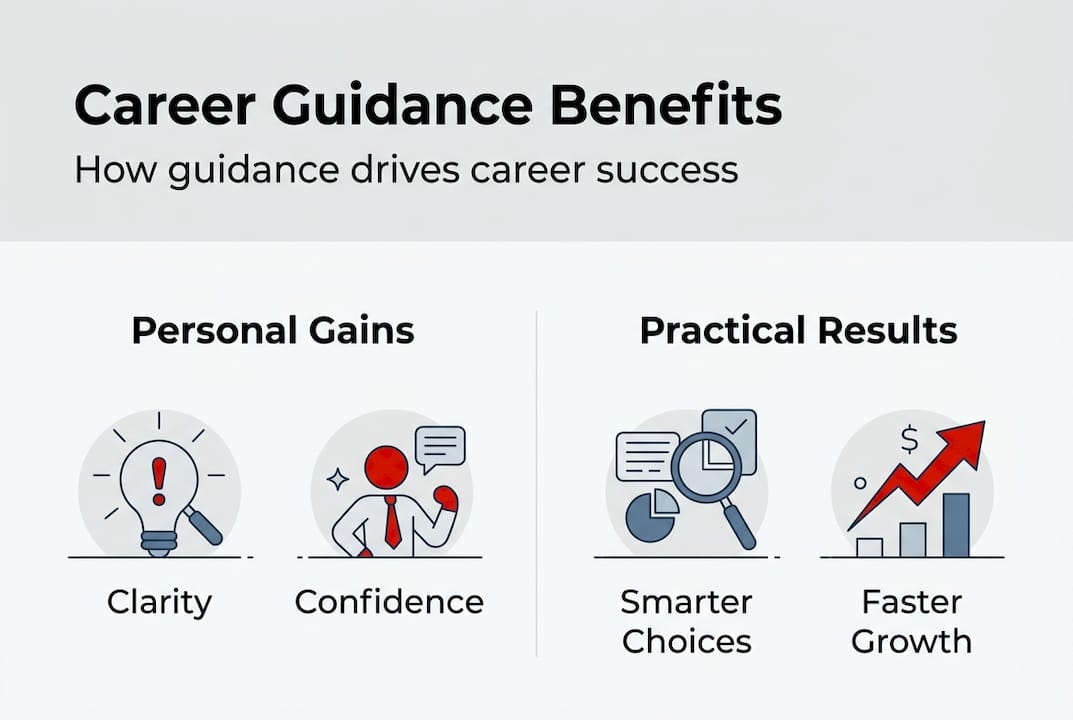
Maintaining confidence throughout the process requires celebrating small wins and learning from setbacks. Job searches take longer than expected and rejections happen to everyone. Guidance helps you interpret these experiences constructively rather than as personal failures. Each application teaches you something about how to present yourself more effectively.
Exploring professional growth strategies provides additional frameworks for advancement. Implementing personalized learning tactics accelerates skill development in your target areas. These resources complement career guidance by deepening your capabilities and making you more competitive.
Explore Tech Moths career guidance resources
Your career development journey doesn’t end with understanding why guidance matters. Tech Moths offers specialized resources that support your next steps toward professional growth and career clarity. Whether you’re building new skills, planning a career pivot, or seeking advancement strategies, our platform provides actionable insights tailored to your needs.
Discover personalized learning tactics that boost engagement and help you master new competencies faster. Explore proven professional growth strategies that successful professionals use to advance their careers. Follow detailed career development steps designed specifically for navigating today’s competitive landscape. These resources transform career guidance principles into practical actions you can implement immediately to accelerate your professional transformation.
FAQ
What exactly does career guidance include?
Career guidance encompasses coaching, assessments, job search support, and strategic planning that help you make informed career decisions. It includes personality and skills testing, resume optimization, interview preparation, and ongoing mentorship. The goal is reducing uncertainty and building confidence through structured support tailored to your situation.
Who benefits most from career guidance services?
Students entering the workforce, young professionals navigating early career choices, and individuals considering career changes gain the most value. Anyone facing important career decisions or feeling stuck in their current path benefits from external perspective and strategic frameworks. The support proves especially valuable during transitions when uncertainty peaks.
How do I choose the right career guidance service?
Evaluate services based on their specialization, methodology, and track record with people in situations similar to yours. Look for transparent processes, qualified counselors, and ethical data practices. Read reviews from past clients and ask about their success rates. Consider whether you prefer in-person, virtual, or AI-powered guidance based on your learning style and budget. Reviewing career change resume tips helps you prepare materials before engaging services.
How does career guidance reduce decision-making stress?
Guidance increases self-efficacy by helping you understand your strengths and how they apply to career opportunities. This clarity replaces anxiety with confidence because you’re making informed choices rather than guessing. Structured support breaks overwhelming decisions into manageable steps, reducing fear of making wrong choices. The process validates your capabilities and shows concrete paths forward, eliminating the paralysis that comes from too many unclear options.
What should I consider when changing careers?
Assess financial risks including potential income reduction and the cost of additional training or certifications. Identify skill gaps between your current abilities and target role requirements, then create a plan to close them. Build a financial buffer covering three to six months of expenses before transitioning. Research the new field thoroughly through informational interviews and job shadowing. Prepare for a psychological adjustment period as you adapt to unfamiliar work environments. Seeking career pivot advice provides field-specific strategies that increase success rates.
Can technology improve career guidance services?
AI enables personalized recommendations at scale, analyzing your profile against thousands of career paths to identify optimal matches. Technology makes guidance more accessible and affordable by automating routine analysis and suggestion generation. However, ethical concerns about algorithmic bias, privacy, and transparency require careful oversight. The best approach combines AI efficiency with human expertise for ethical decision-making and contextual understanding. Learning about AI in education and current AI trends helps you understand how these systems work and their limitations.
